Skip to main content
X
Search this site
Eyebrow Menu
About
About
Advertise
Archive
Contact Us
DAIC Awards
Subscribe to newsletters
Blogs
Blogs
Blog Series
Buyer's Guide
Calendar
Case Studies
Comparison Charts
Videos
Videos
Innovative Hospital Videos
Webinars
Search this site
Sign In
New User? Register Here
Cath Lab
Angiography systems
Balloon catheters
FFR Technologies
Hemostasis management
Hemodynamic Support
Hybrid OR
Innovative Hospitals
Baylor Scott and White Heart Hospital
Henry Ford Hospital
Northwestern Medicine
Tufts Medical Center
University of Colorado Hospital
Intravascular imaging systems
Interventional radiology
Peripheral Artery Disease
Stents
COVID-19
Diagnostics
Blood Testing
ECG
Remote monitoring
Wearable Sensors
EP Lab
Ablation systems
Atrial Fibrillation
Cardiac resynchronization therapy devices (CRT)
Implantable cardioverter defibrillators (ICD)
Leads, implantable devices
Pacemakers
FDA
Heart Failure
Stroke
Imaging
Cardiac Ultrasound
Computed Tomography (CT)
Contrast Media
Magnetic Resonance Imaging (MRI)
Nuclear Imaging
Radiation Dose management
PET Imaging
Pharma
Structural Heart
Congenital Heart
Heart Valve Technology
Hybrid OR
Left atrial appendage (LAA) occluders
Structural heart occluders/closure devices
Conference Coverage
ACC
AHA
AIMed
ASE
ASNC
EuroPCR
ESC
HIMSS
HRS
RSNA
SCAI
SCCT
STS
TCT
VIVA
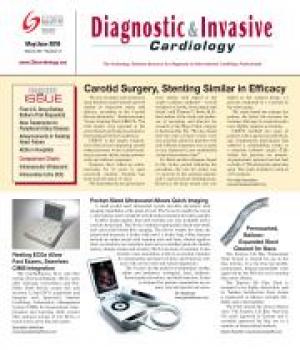
May/June 2010
Digital Edition
Screening Risk for Sudden Cardiac Death
Comparing CTA Scan and MRA Scan
AEDs to the Rescue
Laser Atherectomy Allows Ease of Use in Most PAD Cases
New Indications to Treat Heart Failure
Fluid Status Monitoring May Offer Early Heart Failure Warning
Technology Tidbits From ACC 2010
IVUS Developments Increase Diagnostic Value, Ease of Use
Intracardiac Ultrasound More Accurately Guides Therapies
Companies Developing Drug-Eluting Balloons
First Drug-Eluting Balloon Brought Before the FDA
Devices Offer New PAD Treatment Options
Bottom Menu
Topics We Cover
Advertise
Contact
Privacy Policy
Cookie Policy
Terms and Conditions
Sitemap
© Copyright
Wainscot Media
. All Rights Reserved.
Subscribe Now
×
E-newsletter subscription form