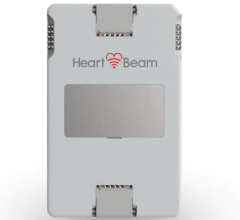
The Philips ECG AI Marketplace gives cardiac care teams access to multiple diagnostic tools powered by artificial intelligence in one central location. Photo: Philips
Artificial intelligence (AI) applications can help clinicians quantify calcium in arteries, detect signs of reduced left ventricular ejection fraction (LVEF), and identify patients who might need earlier intervention. Yet the burden for integrating all this data often falls on the cardiologist, thereby limiting the impact of AI-enabled insights across the cardiac care pathway.
“Physicians have to do a huge amount of manual work stitching together each patient’s longitudinal record of care, and it can change relatively quickly,” says Jon Kamerman, enterprise healthcare solutions leader at Philips. “That keeps them from having conversations and fostering a connection with their patients, and that’s not good, because patients need to follow their physicians’ recommendations.”
That’s why building AI-ready cardiac programs will require service line leaders and clinicians to focus less on adding new algorithms and more on integrating AI into everyday cardiology workflows, according to Kamerman.
No Integrations, No Intelligence
For AI to improve cardiac care, the insight generated by one algorithm must inform the next clinical decision, which means clinician workflow and data flow must be connected. “No integrations, no intelligence,” Kamerman says. “Interoperability means integration, and that’s intelligence. It’s the connection of data to AI that allows AI to work.”
To understand why, Kamerman explains the scenario of a patient whose standard 12-lead electrocardiogram (ECG) is analyzed by Anumana’s FDA-cleared LEF algorithm (available through the Philips ECG AI Marketplace) and indicates low LVEF. By the time the patient reaches a cardiologist, that person may have undergone multiple tests, including Holter monitoring, a cardiac ultrasound, a stress test and a CT scan with a calcium score. Each result adds a new layer of clinical information that a cardiologist must review alongside the patient’s prior ECGs and medical history.
“AI consolidators organize data into a narrative that’s faster to read and tells a patient’s story cohesively,” Kamerman says. “AI can be embedded throughout the entire journey, as long as all of this network is connected to AI, to each other, and to the physician.”
That connectivity, Kamerman says, can help to reduce the clinician’s burden and make AI tools more powerful. “It gives AI broader subject matter to work with and can help with more context and summaries and other things that it’s actually amazingly good at doing,” he says.
Clinical results from AI algorithms can also smooth handoffs between providers and serve as the foundation for precise cardiac care. For example, in the case of a patient with suspected low LVEF, a primary care physician can include the AI-generated ECG results in the ultrasound order within the hospital’s electronic medical record, thereby improving the quality of the sonographer's study by calling attention to the LVEF finding.
The Algorithm vs. Platform Question
An AI-enabled care pathway requires ongoing auditing and traceability, yet 70% of clinicians say clear processes for monitoring AI tools are not yet in place.1 Health systems are moving past that barrier by governing the entire care pathway strategically.
“The algorithm vs. platform discussion has to happen early on,” Kamerman says. “How big is this going to get? Are we going to overwhelm our physicians if we keep layering on different apps to accomplish our strategy?”
Kamerman recommends that cardiology leaders gather input from multiple teams—including information technology (IT), administration, doctors, department directors, quality, and risk management—then define a strategy for how to deploy, govern, and scale AI across the cardiac pathway.
“Sometimes it might just start with an IT validation of an AI platform,” Kamerman says. “If you want to achieve your strategic initiative and you can’t get past that hurdle because no one understands why you want to do it, you’re stuck. Those kinds of big conversations break down those hurdles.”
Reference
-
Philips. Future Health Index 2026: AI in Practice—Shaping the Future of Healthcare Now. Koninklijke Philips N.V.; 2026. Accessed July 27. philips.com/c-dam/corporate/newscenter/global/pdf/philips-future-health-index-2026-report-ai-in-practice.pdf


 August 24, 2026