Image: Getty Images
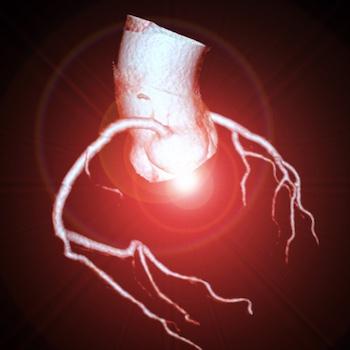
Dec. 8, 2025 — In November, The Lancet published an international expert consensus review, “Contemporary, non-invasive imaging diagnosis of chronic coronary artery disease”, that shows using CT coronary angiography (CTCA) when patients exhibit low to intermediate pre-test probabilities (PTP) for coronary disease can lead to more cardiac patients being accurately diagnosed, which helps save lives. Currently, the testing is not readily available at many medical facilities, and guidelines generally recommend against routine testing for low PTP (<5%).
“Implementing CCTA testing for patients with a low to intermediate probability is advantageous because it has a high negative predictive value, meaning a negative result is very reliable in ruling out significant blockages”, says Partho P. Sengupta, MD, DM, FACC, FASE, who coauthored the study and is the Henry Rutgers Professor of Cardiology and the chief of the Division of Cardiovascular Diseases and Hypertension at Rutgers Robert Wood Johnson Medical School (RWJMS), as well as chief of Cardiology at Robert Wood Johnson University Hospital (RWJUH), an RWJBarnabas Health facility, who served as a coauthor on The Lancet expert review.
For patients with a high PTP, CTCA can be used, however, it tends to overestimate the degree of stenosis and can lead to more false positives in high PTP patients.
According to Dr. Sengupta, “Heavy coronary artery calcification can make it difficult to accurately measure the degree of stenosis (narrowing), leading to overestimation of the blockage’s severity.”
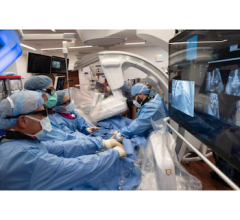
In this case further testing including Fractional Flow Reserve (FFR), a minimally invasive procedure to figure out how bad the narrowing is in the arteries, or a more invasive procedure, such as cardiac catheterization, may be necessary.
Testing is readily available at RWJMS and RWJUH where doctors are currently using both CTCA and FFR for patients in all pre-test probability categories. They are also using an Artificial Intelligence (AI) software for plaque assessment. Dr. Sengupta says his team has a clinical study underway, to assess the use of AI in CT angiography.
For more Information on Robert Wood Johnson University Hospital visit www.rwjbh.org/newbrunswick

 August 27, 2026