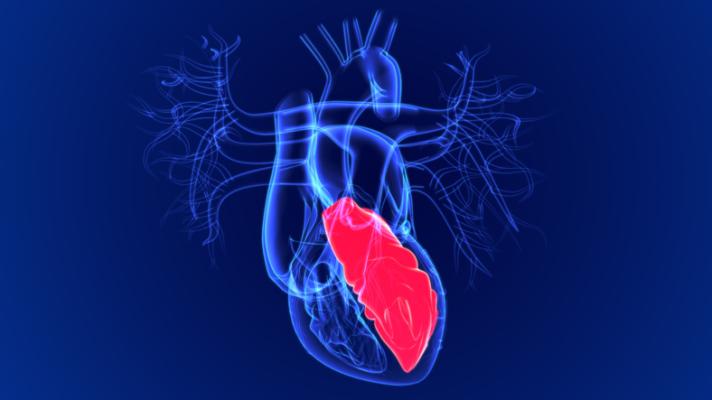
A newly-issued Scientific Statement on Durable Mechanical Circulatory Support in the October issue of the Journal of the American College of Cardiology, JACC, covers the use of durable mechanical circulatory support, referring to it as an important but often underutilized treatment for patients with advanced heart failure (HF). Image courtesy: Getty Images
October 5, 2023 — A newly-issued "Scientific Statement on Durable Mechanical Circulatory Support" in the October issue of the Journal of the American College of Cardiology, JACC, covers the use of durable mechanical circulatory support, referring to it as an important but often underutilized treatment for patients with advanced heart failure (HF).
The use of durable mechanical circulatory support, such as a durable left ventricular assist device (dLVAD), is an important but often underutilized treatment for patients with advanced heart failure (HF), according to a JACC Scientific Statement published in its October issue.
The researchers offered the following summary of the important issue in their abstract:
Despite advances in medical therapy for patients with stage C heart failure (HF), survival for patients with advanced HF is <20% at 5 years. Durable left ventricular assist device (dLVAD) support is an important treatment option for patients with advanced HF. Innovations in dLVAD technology have reduced the risk of several adverse events, including pump thrombosis, stroke, and bleeding. Average patient survival is now similar to that of heart transplantation at 2 years, with 5-year dLVAD survival now approaching 60%.
The authors further noted: Unfortunately, greater adoption of dLVAD therapy has not been realized due to delayed referral of patients to advanced HF centers, insufficient clinician knowledge of contemporary dLVAD outcomes (including gains in quality of life), and deprioritization of patients with dLVAD support waiting for heart transplantation. Despite these challenges, novel devices are on the horizon of clinical investigation, offering smaller size, permitting less invasive surgical implantation, and eliminating the percutaneous lead for power supply.
Three key highlights of the Scientific Statement were presented, which include:
- the prognosis for patients with advanced HF refractory to guideline-directed medical therapy is poor;
- durable, implantable LVAD therapy can improve survival and quality of life for these patients; and,
- although contemporary LVAD technology has reduced the incidence of adverse events, durable mechanical support is underutilized.
Ryan J. Tedford, MD, FACC, Medical University of South Carolina, et al., wrote that, with innovations in dLVAD technology, the risk of several adverse events has been reduced, such as pump thrombosis, stroke and bleeding. The “average patient survival is now similar to that of heart transplantation at two years, with five-year dLVAD survival now approaching 60%.” However, “greater adoption of dLVAD therapy has not been realized due to delayed referral of patients to advanced HF centers, insufficient clinician knowledge of contemporary dLVAD outcomes (including gains in quality of life), and deprioritization of patients with dLVAD support waiting for heart transplantation.”
In the Scientific Statement, issued Sept. 25, the authors review contemporary outcomes with dLVADs, including patient-reported outcomes; current indications and timing of referral; patient selection; surgical considerations; unique patient populations, including women, children, and adults with congenital heart disease; and gaps in knowledge and future directions.
They note that several novel, durable mechanical circulatory support devices are on the way that would allow for less invasive surgical implantation and eliminate the percutaneous lead for power supply. They also acknowledge there are gaps that need to be addressed, including the need to “improve MCS use as a complement or alternative therapy to heart transplantation.”
Lastly, the summary noted the authors state that dLVAD therapy can improve the survival and quality of life of patients with HF and that “if implemented and expedited, these developments can duplicate the significant progress achieved in the field.”
Lead author Tedford was joined by the following co-authors: Marzia Leacche, MD, CoreWell Health, Grand Rapids, Michigan; Angela Lorts, University of Cincinnati; Stavros G. Drakos, MD, University of Utah; Francis D. Pagani, MD, University of Michigan; and Jennifer Cowger, MD, Henry Ford Hospital.
Reference: J Am Coll Cardiol. 2023 Oct, 82 (14) 1464–1481
More information: www.acc.org

 April 02, 2026