Jan. 7, 2026 — UltraSight, a provider of AI-guided cardiac imaging workflows, has partnered with Jefferson Health, one of the largest academic health systems in the United States, in a clinical study to advance rapid incorporation of diagnostic-quality FoCUS echocardiogram workflows. The pilot is funded in part by the Israel Innovation Authority (IIA) through the Jefferson–Israel 2025 Health Tech Pilot Program, which provides Israeli companies with real-world clinical environments to evaluate new technologies, accelerate validation, and support successful entry into the U.S. healthcare market.
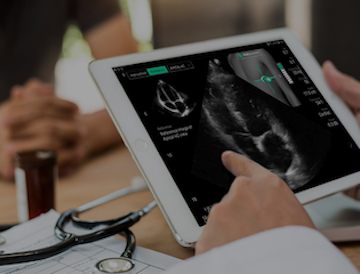
The Jefferson Health/UltraSight pilot will evaluate how advanced practice providers use UltraSight’s Echo Stewardship Platform to acquire diagnostic-quality echocardiographic views at the bedside.
The collaboration comes at a time when demand for echocardiography has reached record levels, with U.S. echo volumes rising 20–25 percent over the past decade and persistent cardiac sonographer shortages affecting hospitals. These constraints can delay essential cardiac assessments and adversely affect care, particularly for time-sensitive conditions such as pulmonary embolism (PE), where rapid right-ventricular (RV) evaluation can influence management and outcomes.
Advancing Bedside Access to Cardiac Imaging
The Jefferson Health/UltraSight pilot will assess how UltraSight’s AI platform can support advanced practice providers in acquiring diagnostic-quality cardiac images at the bedside for evaluation of RV dysfunction in patients diagnosed with PE. RV strain is a key indicator of clinical severity, yet timely access to transthoracic echocardiography (TTE) can be challenging in emergency departments and hospital settings.
Imaging acquired using UltraSight will be compared with gold-standard TTE to determine concordance in RV assessment and to understand how AI-supported workflows may accelerate decision-making and improve efficiency across clinical care settings.
“Pulmonary embolism requires timely evaluation, and any delays in obtaining cardiac imaging can prolong uncertainty in critical care and emergency environments,” said Frances Mae West, MD, Associate Professor of Medicine, Director of the Pulmonary and Critical Care Medicine Fellowship at Jefferson, and Principal Investigator of the study. “We are eager to evaluate how AI-guided bedside imaging can expand the capabilities of frontline clinicians while maintaining the level of diagnostic quality needed for confident decision-making.”
Addressing System-Wide Pressures in Echocardiography
Health systems continue to navigate increasing imaging demand, staffing shortages, and workflow bottlenecks. Studies estimate that the national cardiac sonographer workforce deficit may exceed 15–20 percent, exacerbating prolonged wait times and quality variability.
AI-guided bedside echocardiography offers a scalable mechanism to support echo stewardship—fostering the right study, at the right time, with the right diagnostic quality—by enabling timely, high-quality imaging and decision-making at the bedside.
“We are seeing growing interest across the echocardiography community in approaches that improve throughput and enhance workflow,” said Praveen Mehrotra, MD, Associate Professor of Medicine and Medical Director of the Echocardiography Lab for the Jefferson Heart Institute. “Studies like this are important because they allow us to evaluate how technology can support clinicians and help address clinical workflow challenges in delivering care.”
The Jefferson Health/UltraSight study builds on recent clinical evidence demonstrating UltraSight’s impact on image quality and workforce scalability. In a 2025 randomized controlled trial at Stanford (Kumar et al., Biology Methods and Protocols), novice clinicians using UltraSight achieved significantly improved image-acquisition quality and faster skill development compared with clinicians who did not use the software.
Learn more at https://ultrasight.com/

 August 28, 2026