September 13, 2017 — A subset analysis of the DETOUR I clinical trial showed promising safety and effectiveness results of PQ Bypass’ Detour System for treating long-segment (>25 cm) blockages in the femoropopliteal artery. The data were presented as a late-breaking clinical trial session at Vascular InterVentional Advances (VIVA 17), Sept. 11-14 in Las Vegas. DETOUR I trial results were presented by Sean Lyden, M.D., chairman of the department of Vascular Surgery at Cleveland Clinic.
In complex peripheral artery disease (PAD), arteries in the leg can become blocked by long segments of plaque that restrict blood flow to the lower leg and foot. This can lead to pain, loss of mobility and amputation. Extremely long blockages, such as those greater than 20 cm, are quite challenging to treat. Historically, physicians have treated these blockages with open bypass surgery, which has the benefit of durability; however, it is associated with an increased risk of complications, longer hospital stays and prolonged rehabilitation. Minimally invasive approaches to PAD, including angioplasty and stenting, work very well on shorter blockages; however, they have not been as effective on longer ones.
“Patients with long segment femoropopliteal blockages are in need of advanced therapeutic alternatives to existing treatments. While endovascular revascularization is effective in shorter lesions, its durability in longer segment blockages has not matched that of open surgery. Fully percutaneous bypass is designed to combine the durability advantages of surgical bypass with the minimally invasive advantages of a percutaneous procedure,” said Lyden. “The outcomes we are seeing in the DETOUR I trial indicate that a fully percutaneous bypass procedure has potential to fill this gap in treatment options.”
The analysis of a subset of the DETOUR I study presented at VIVA 17 is one of the largest prospective series ever to evaluate the percutaneous treatment of femoropopliteal blockages with lengths of 25-45 cm (mean of 33.8 cm). The six-month outcomes from 50 patients demonstrated the Detour System’s ability to successfully treat these long blockages without significant impact on venous health and low rates of major adverse events (MAEs). The results included:
- Primary safety endpoint: 2 percent MAEs – defined as death, target vessel revascularization (TVR) or amputation at 30 days. There were no deaths or amputations and one TVR.1;
- Primary patency of 88.9 percent at six months with optimal placement, overall primary patency of 76.9 percent;
- Successful delivery of devices to the identified area and removal of the delivery system in 100 percent of lesions (53/53);
- Improvement in Rutherford Class of at least 2 grades in 92 percent of patients (45/49)2;
- Significant improvement in ankle brachial index from 0.64 ± 0.17 to 0.92 ± 0.14 (p<0.0001); and
- No impact on venous function and no device-related deep vein thrombosis in treated vessels .
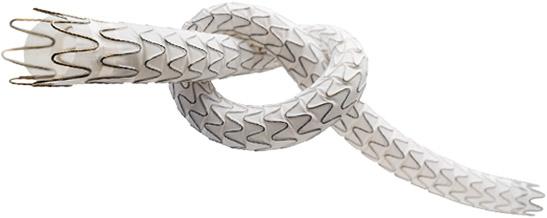
Percutaneous femoropopliteal bypass (the Detour procedure) is a newly developed procedure that utilizes PQ Bypass’ proprietary Detour System technologies — the Torus Stent Graft, Detour Crossing Device and Detour Snare — to provide fully percutaneous bypass of long-segment blockages in the femoropopliteal artery. The Detour procedure creates a pathway around a lesion by placing stent grafts that cross from the superficial femoral artery (SFA) into the femoral vein and back into the artery. The new path through the stent grafts re-directs oxygen-rich blood around the blockage and restores blood flow to the lower leg and foot of the patient.
In March 2017, PQ Bypass received CE Mark approval for all three devices that are included in the Detour System.
For more information: www.pqbypass.com
1. One patient underwent TVR graft disassociation resulting in acute limb ischemia prior to discharge, treated successfully with an additional DETOUR Stent Graft
2. Excludes a subject who died from ischemic stroke prior to 6-month follow-up

 August 28, 2026