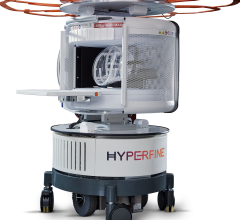
Feb. 16, 2007 — A Florida State University researcher has collaborated in a research project that could lead to ways of producing even sharper medical images than those produced with MRI.
Naresh Dalal, professor of Chemistry and Biochemistry at FSU, recently conducted experiments with other researchers from FSU, the University of Colorado and the National Institute of Standards and Technology NIST) that uncovered unique properties in a molecular magnet — properties that could significantly increase the resolution of MRIs.
Their paper, "Efficacy of the Single-Molecule Magnet Fe8 for Magnetic Resonance Imaging Contrast Agent Over a Broad Range of Concentration," was published in the current issue of Polyhedron, a rigorously peer-reviewed science journal.
"There are continual efforts to enhance the level of image clarity found in today's MRI devices," Dalal said. "MRIs utilize injectable dyes, but those in current use, while easy to manufacture, offer a relatively low contrast. Our experiments show that a class of materials known as single-molecule magnets might produce greater contrast in medical imaging, meaning MRIs would be much more accurate."
Working at FSU and the National High Magnetic Field Laboratory, Dalal and another FSU researcher, chemistry graduate teaching assistant Vasanth Ramachandran, were able to synthesize a substance known as Fe8 that is one of the strongest magnets known.
"Fe8 is a molecule made up of eight iron ions that form a tight molecular bond," Dalal said. "It has a powerful magnetic field, which is obviously important in generating a very clear image with an MRI device. What's more, Fe8 is non-toxic and water-soluble, making it safe for injection into the body."
Despite the promising results suggested by the team's research, Dalal admitted that there still are some hurdles to overcome before Fe8 becomes a viable MRI option.
"These compounds are not very stable," he said. "They break down in water within a few hours,” he said. “We're now looking at ways to increase their stability so that they can be stored for long periods of time and transported easily."
Dalal's research is supported by an eight-year, $600,000 National Science Foundation grant. The grant is in its sixth year.

 September 04, 2026