
June 24, 2009 – CircuLite Inc. today announced the publication of positive data from its ongoing CE mark clinical trial for the Synergy Pocket Micropump for chronic heart failure in the Journal of the American College of Cardiology.
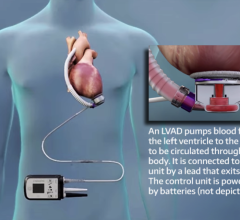
The data demonstrated that partial circulatory support with Synergy yielded statistically significant long-term improvements in cardiac function, hemodynamic benefits and evidence of myocardial recovery. These results were originally presented in a late-breaking session at the 2009 Annual Meeting of the American College of Cardiology. Synergy is a microblood pump, the size of an AA battery that can be implanted superficially in a pacemaker-like pocket. Synergy is the first and smallest device designed for partial circulatory support (up to 3 L/min) and long-term use in patients with class IIIb and early class IV heart failure.
“Data from the ongoing CE mark trial continue to show that Synergy provides significant hemodynamic benefits to patients and prevents progressive hemodynamic deterioration,” said senior author Daniel Burkhoff, M.D., Ph.D., chief medical officer of CircuLite and adjunct associate professor of medicine at Columbia University Medical School. “Synergy, with its small size and minimally invasive procedure, could result in quality-of-life improvements for patients – CircuLite’s ultimate goal for this device.”
The company is currently pursuing CE mark approval for Synergy and anticipates launching the device in Europe later this year.
At the time of its writing, the article details results for 17 patients (14 males) who were implanted with Synergy. Significant improvements in hemodynamics were observed in the first day of support. Additionally, nine patients had since completed their follow-up right heart catherization at a mean of 10 weeks, and the data demonstrate that the significant hemodynamic improvements were sustained. Mean arterial pressure increased from 67 mmHg to 80 mmHg and mean cardiac index increased from 2 to 2.8 L/min/m2. Large reductions in mean capillary wedge pressure were observed (30 to 18 mmHg). In addition, mean peak VO2 increased from 9.7 to 14.1 ml/kg/minute. The median duration of patient support with Synergy was 81 days, with the longest support period of 213 days. Eighty-two percent (14/17) of patients were alive and nine received heart transplants. The study also demonstrated relatively quick patient recovery following the 90-minute minimally invasive procedure.
The article, titled “Proof of Concept: Hemodynamic Response to Long-Term Partial Ventricular Support with the Synergy Pocket Micro-Pump,” was published in the current print issue of the Journal of the American College of Cardiology (Vol. 53, Issue 26, June 30, 2009).
For more information: www.CircuLite.net

 June 19, 2024