March 14, 2011 – Doctors at Beaumont Hospital in Troy, Mich., have performed the state’s first minimally invasive robotic procedure to correct atrial fibrillation. The new robotic maze procedure is an alternative to open-heart surgery. It's performed through tiny, keyhole incisions with fewer complications and a shorter hospital stay.
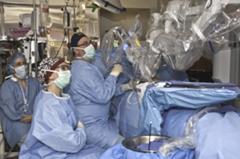
Phillip Robinson, M.D., cardiovascular surgeon, Brian Williamson, M.D. and Ilana Kutinsky, D.O., both electrophysiology cardiologists, performed the robotic-assisted maze procedure on March 2 on a 66-year-old woman. The robotic approach allows for smaller incisions and greater precision.
A maze procedure is a surgical treatment for atrial fibrillation that is used to stop an irregular heartbeat and restore a normal heart rhythm. Patients are candidates for a maze procedure if their irregular heartbeat cannot be treated with medication or other nonsurgical approaches.
"This new robotic maze procedure allows us to correct an electrical irregularity in the heart without having to perform open-heart surgery," Robinson said. "We don't have to open the patient's chest, stop the heart or place the patient on a heart-lung machine. As a result, patients have fewer complications, less risk of infection, a shorter hospital stay and a quicker recovery."
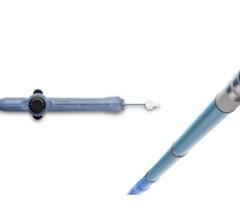
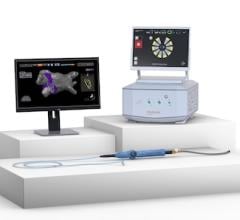
With the procedure, the surgeon makes five tiny incisions the size of a dime in the patient's chest, inserting a small endoscopic robotic camera to view the outer surface of the heart. The surgeon sits at a console viewing 3-D images from the robotic camera, while directing robotic arms with their attached surgical instruments. A device is then passed through the tiny incisions to ablate or destroy areas of heart tissue, creating a scar that will block the conduction of abnormal electrical impulses and create a pathway, or maze, for normal electrical signals to travel to the heart's lower chambers (ventricles).
"This procedure combines the specialized skills and expertise of a cardiovascular surgeon and an electrophysiology cardiologist to provide a new treatment option benefiting AF patients," Kutinsky said.
The procedure takes approximately two to three hours. Most patients are able to go home within two to three days after the procedure.
Candidates include those who cannot tolerate drugs, such as blood thinners; patients whose quality of life is limited by drugs; those who continue to slip into an irregular heart rhythm; and those who cannot have catheter ablation or have had it, but still have AF symptoms.
Atrial fibrillation is an irregular rhythm of the heart's upper chambers (atria) causing the heart to quiver in a fast, uncontrolled manner. As a result, blood is not pumped completely out of the atria and may pool or clot. If a blood clot leaves the heart and becomes lodged in an artery in the brain, a stroke may occur. About 15 percent of strokes occur in people with atrial fibrillation.
For most people with atrial fibrillation, slowing heart rate with medications is the most appropriate treatment. AF patients can also be treated with electrical cardioversion (restoring heart rhythm with an electrical shock); radiofrequency ablation (destroying heart tissue with radiofrequency energy); or through traditional open-heart maze surgery. Patients with atrial fibrillation should also take blood thinners to prevent stroke, unless they have a condition that would make use of blood thinners dangerous.
For more information: www.heart.beaumonthospitals.com
 September 08, 2026