February 1, 2016 — The findings of a major study led by cardiovascular imaging specialists at Allegheny General Hospital (AGH) suggest magnetic resonance imaging (MRI) is a safe and effective diagnostic procedure for patients with implantable cardiac devices. The research, believed to be the first ever focused solely on the value of MRI in this patient population, is being presented at the annual Society of Cardiovascular MRI (SCMR) Scientific Sessions meeting in Los Angeles.
“Having already established the safety of MRI for patients with these devices when performed at cardiac MRI centers with advanced capabilities, it was important to determine if significant life-saving or life-changing diagnoses could also be made based on the results of the MRI,” said Robert Biederman, M.D., medical director of the Cardiovascular MRI Center at AGH’s Cardiovascular Institute and one of the lead researchers on the study. “This ongoing study has shown that using MRI on patients with implanted pacemakers and defibrillators has added substantial clinical value to patient diagnosis and subsequent patient management, justifying the risk of the procedure.
“Now that we have been able to minimize the risks of MRI to patients with these implanted devices, it was crucial to prove the value of using what has really become the imaging tool of choice for countless clinical diagnoses,” added Biederman, who served as moderator for the SCMR’s opening session.
Over the last several years, AGH specialists evaluated 157 patients. That included 114 neurology/neurosurgery cases, 36 cardiovascular cases and seven musculoskeletal cases. For 88 percent of the neurology/neurosurgery cases, the MRI scan added value to the final diagnoses – with 18 percent of those cases seeing a change to the original diagnoses thanks to the use of MRI. And 92 percent of the cardiac cases saw a benefit from the use of MRI, while 100 percent of the musculoskeletal cases realized a benefit from using MRI. Additionally, Biederman reported, there were no adverse clinical events associated with it for any of the patients studied.
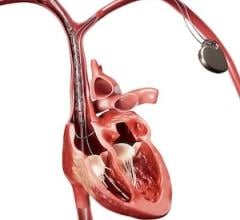
Approximately 3 million Americans currently have an implanted cardiac device and hundreds of thousands more receive them each year. It is estimated that as many as three-quarters of those who have a pacemaker or implantable cardioverter defibrillator (ICD) will require an MRI at some point in their lifetimes.
“MRI is simply too important a diagnostic tool not to be able to have it in our arsenal to evaluate and help determine the best treatment for patients who have an implanted device,” said Biederman. “Once the safety of using it had been established, there was still some question about its ultimate value. We believe the results of this study provide a clear and resounding answer to that question.”
Under Biederman’s direction, patients with implanted cardiac devices who are referred for MRI at the hospital undergo an extensive evaluation of their cardiovascular health and level of device dependence.
Once a patient is cleared to undergo MRI, Biederman and his team perform a baseline device interrogation and then convert the pacemaker and/or defibrillator to a safer mode of operation for the length of the test. If patients are determined to be non-pacemaker dependent under baseline conditions, the device may be turned off completely while the imaging takes place, further reducing but not eliminating risk. Additionally, manipulations of the MRI environment to minimize likelihood of heating, induction of radio-frequency energy and triggering of certain potentially lethal rhythms are performed.
During the procedure, a patient’s heart rhythm is monitored in real-time in the MRI suite and the entire process is closely supervised by Biederman, cardiovascular physicist Moneal Shah, M.D., and the Cardiovascular MRI Center’s team of nurses and technologists. Once the MRI is completed, the implanted device is reprogrammed to its original settings.
For more information: www.ahn.org

 August 17, 2026