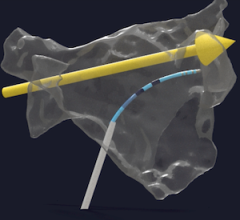

November 2, 2016 — Medtronic plc recently announced new clinical data for the Harmony Transcatheter Pulmonary Valve (TPV) from its early feasibility study, showing improved hemodynamics from baseline and consistent valve performance at one year. Presented at the Transcatheter Cardiovascular Therapeutics (TCT) scientific symposium, the positive new data from the first-of-its-kind early feasibility study led the U.S. Food and Drug Administration (FDA) to also recently approve the initiation of a Pivotal Investigational Device Exemption (IDE) study to evaluate the valve’s safety and effectiveness.
The Harmony TPV was designed in an effort to offer a treatment alternative for patients with congenital heart disease (CHD), specifically the 80 percent of CHD patients born with right ventricular outflow tract anomalies who undergo a surgical repair early in life. For these patients, the Harmony TPV provides a less invasive option to restore normal valve function later in life. The minimally invasive TPV therapy builds off of the Melody TPV technology.
“These outcomes are promising indicators that this technology can help patients who experience severe pulmonary regurgitation after repair of complex congenital heart disease,” said Lee N. Benson, M.D., professor of pediatrics at the University of Toronto and director of the Cardiac Diagnostic and Interventional Unit at The Hospital for Sick Children in Toronto, Canada. “We look forward to further evaluating the clinical performance of the Harmony TPV in future studies and providing this growing patient population with a less invasive option to address pulmonary regurgitation, which can be adapted to different outflow tract morphologies,” added Benson, who also presented the data at the meeting.
Patients enrolled in the Harmony TPV early feasibility study who were followed out to one year (N=18) experienced statistically significant improvements in hemodynamics, including RV end diastolic volume from 280.4 ± 74.0ml pre-implant to 195.1 ± 57.9 at one year (N=12, p= 0.001). Mean gradients were consistent and stable at one-year follow up and there were no clinically significant paravalvular leaks.
The Harmony TPV is available for investigational use only.
For more information: www.medtronic.com
 November 03, 2026