January 4, 2017 — A new minimally invasive technique for repairing the most common cardiac birth defect in extremely premature newborns can be performed safely with a high success rate in babies as small as 755 grams – about 1.6 pounds – only a few days after birth.
The study, published in the Journal of the American College of Cardiology: Cardiovascular Interventions, details the results of a catheter-based approach to repairing patent ductus arteriosus (PDA), commonly referred to as “a hole in the heart.”
“If left untreated, PDA can cause heart failure and lifelong complications,” said Evan M. Zahn, MD, an expert in congenital heart disease and director of the Cedars-Sinai Heart Institute’s Guerin Family Congenital Heart Program. “Current treatment options are not optimal and are fraught with complications.”
Before birth, a fetus’ blood does not need to go to its lungs to get oxygenated because the mother’s own blood circulation supplies oxygen. Key to this process is the ductus arteriosus, a connection between the heart’s two major arteries that allows the fetus’ blood to bypass its lungs. After birth, however, the baby needs to breathe on its own, so this connection naturally closes. When closure fails, patent ductus arteriosus ensues, leading to difficulty with breathing and feeding, brain hemorrhages and death of premature infants in some cases.
Medication therapy is successful in less than 60 percent of newborns with PDA but can cause side effects such as kidney failure and bleeding, Zahn said. Surgery has its own short-term risks, and recent evidence suggests that long-term outcomes after surgery for premature babies with PDA may be worse than previously thought.
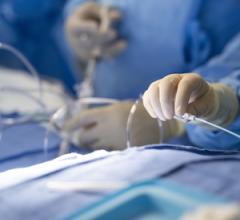
Zahn, an expert in catheter-based cardiac interventions, and pediatric cardiac surgeon Alistair Phillips, M.D., co-director of the Guerin Family Congenital Heart Program, developed a minimally invasive, transcatheter procedure for premature infant PDA closure. Guided by ultrasound waves, the physician guides a catheter through a vein in the leg to the heart and closes the hole. The procedure can be performed at the bedside in the medical center’s Neonatal Intensive Care Unit and takes only a few minutes.
In the study, 24 extremely premature infants born at just 24 to 32 weeks’ gestation underwent the procedure, which was successful in 21 of the babies. The three babies whose individual anatomy precluded successful device closure later underwent successful surgical closure. Because of the fragility of some of the babies in the study, several of the procedures were performed at the patient’s bedside instead of an operating room.
“The development of catheter-based procedures for infants is a sea change in the treatment of congenital heart disease,” said Eduardo Marbán, M.D., Ph.D., director of the Cedars-Sinai Heart Institute. “As Dr. Zahn and his team further develop these techniques, parents will no longer have to choose between the risks of surgery and the risks of medications, and babies will get a healthier start in life.”
Although PDA usually is diagnosed at birth, some older children and adults have the condition for years before symptoms are noticed and diagnosed, Zahn said.
“We can use these same techniques on older children and adults with congenital heart disease,” he said. “It is always better for the patient when we can treat a condition without subjecting the patient to the risks and discomfort of surgery.”
For more information: www.interventions.onlinejacc.org

 August 28, 2026