January 31, 2017 — The American College of Cardiology (ACC) issued a statement against President Donald Trump’s recent executive order banning travel by foreign nationals from seven predominantly Muslim countries. ACC President Richard A. Chazal, M.D., FACC, said the ACC is the professional home for more than 52,000 cardiovascular care professionals from around the world and the travel ban hinders the sharing of science and ideas.
Trump signed the order the evening of Jan. 27 to keep refugees and other travelers from entering the country for 120 days. The three-month ban includes Iran, Iraq, Syria, Sudan, Libya, Yemen and Somalia.
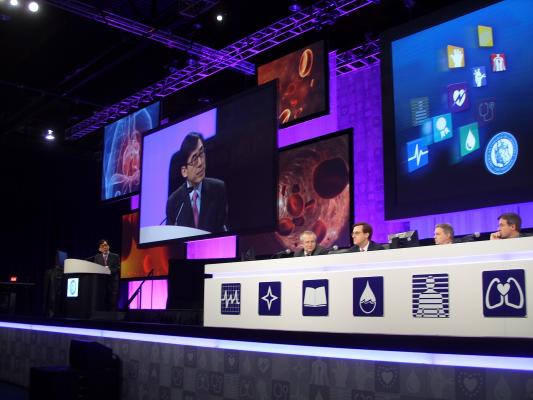
This ban includes the time of the ACC’s annual scientific sessions, which is one of the largest cardiology conferences in the world and attracts a large number of foreign attendees. More than 13,100 healthcare professionals involved in the delivery of cardiovascular care attend the annual ACC meeting to present or attend education sessions in 41 topic areas.
“This diverse group of scientists, teachers and healthcare professionals are united around the common mission of transforming cardiovascular care and improving heart health with the ultimate goal of curbing the global epidemic of cardiovascular disease,” Chazal said of ACC’s members. “The ability to share ideas and knowledge necessary to address this epidemic is imperative. Policies that impede this free-flow of ideas will have a detrimental impact on scientific discovery, as well as the lives of patients around the world. If we are to realize a future where cardiovascular disease is no longer the No. 1 killer of men and women worldwide we must ensure that our system of scientific exchange allows for healthcare professionals to learn from each other regardless of their nationality.”
Additionally, Chazal said international medical graduates, naturalized citizens and legal residents make up a significant portion of the healthcare workforce in hospitals and practices across the United States. “For example, more than 25 percent of current practicing physicians are international medical graduates, with cardiology ranking among the top when broken down by medical specialty,” Chazal explained. “Policies that bring the immigration status of those already here into question, while also limiting the ability of others to legally train in the U.S. going forward, will only serve to exacerbate the already existing cardiovascular workforce shortage, especially in rural America. Such policies also threaten the care continuum of patients who rely on these providers for their medical care.”
So far, the ban is affecting fewer than 20 people registered for the annual ACC meeting, March 17-19, 2017, in Washington, D.C., said Nicole Napoli
associate director of ACC media relations. “We’re working with attendees on an individual basis, but to date we’ve had no cancellations because of the ban. Obviously this will continue to develop.”
In his statement, Chazal said the modern-day Hippocratic Oath in part says: "I will respect the hard-won scientific gains of those physicians in whose steps I walk, and gladly share such knowledge as is mine with those who are to follow." It goes on to say: "I will prevent disease whenever I can ... and I will remember that I remain a member of society, with special obligations to all my fellow human beings."
“The ACC is committed to supporting all of its members — no matter where they live and work, and no matter where they are from — in fulfilling this promise,” Chazal said.
The Society of Interventional Radiology (SIR) and several other societies also issued statements denouncing the executive order. These societies also released statements explaining the ban will prevent some physicians from the targeted countries from attending the annual society meetings and prevent the free flow of scientific knowledge. SIR said it has 570 international members, and at least two were prevented from attending its meeting March 4–9 in Washington, D.C.
For more information: www.acc.org

 April 02, 2026