June 5, 2020 — Abiomed announced the U.S. Food and Drug Administration (FDA) has approved the company's investigational device exemption (IDE) application to start an early feasibility study with a first-in-human trial of the 9 French (Fr) Impella ECP heart pump. Impella ECP, which stands for "expandable cardiac power," will be studied in high-risk percutaneous coronary intervention (PCI) patients.
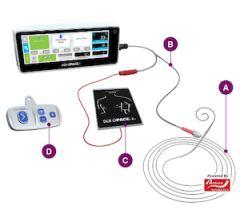
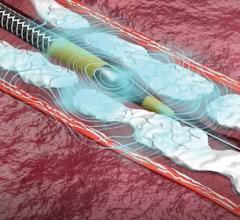
Impella ECP is the world’s smallest hemodynamic support heart pump. It achieves peak flows greater than 3.5 L/min and is delivered though a slender-profile sheath. It is un-sheathed in the descending aorta and expands to approximately 18 Fr. Using a specially designed pigtail, it crosses the aortic valve without a wire, and pumps from inside the ventricle. When the procedure is complete, the pump is re-sheathed back down to 9 Fr and removed with that same profile.
A unique design feature of Impella ECP is that it sits across the valve with a soft atraumatic polyurethane cannula that opens only when the pump is flowing. If the pump stops for any reason, this cannula relaxes allowing the valve leaflets to close around it, maintaining valve competency. Impella ECP is intended for short-term mechanical support in patients undergoing a high-risk PCI, to provide both circulatory support and left ventricular unloading.
For interventional cardiologists, vascular access and closure are critical to the success of PCI procedures with mechanical circulatory support. Typically, these procedures require placement of sheaths or cannulas ranging from 13-24 Fr to perform the intervention. Impella ECP allows for a smaller access site, which may increase adoption. The collapsible cannula, instead of the fix size cannula used on the current generation of Impella devices, will help address issues with needing large-bore vascular access and the associated bleeding complications.
“We are excited about the benefits of this new breakthrough technology, which advances the field of heart recovery,” said Michael R. Minogue, Abiomed’s chairman, president, and CEO. “Abiomed is making significant investments to develop smaller, smarter and more connected technology that forms the foundation of the company’s continued leadership in the field of mechanical circulatory support.”
The prospective, multi-center, non-randomized early feasibility study will allow Abiomed, the study investigators, and the FDA to make qualitative assessments about the safety and feasibility of Impella ECP use in high-risk patients. The primary endpoint of the study is successful delivery, initiation and maintenance of adequate hemodynamic support and a composite rate of major device-related adverse events during high-risk PCI. The study protocol will enroll and treat up to five U.S. patients who require revascularization. If successful, enrollment will be expanded to additional patients, pending FDA approval. Study investigators will begin patient enrollment later this calendar year for the first-in-human trial.
Impella ECP is available for investigational use only and is not approved for use outside of clinical studies.
For more information: www.impella.com
Related Impella Content:
VIDEO: Demonstration of Abiomed Impella ECP 9 French Transcatheter Ventricular Assist Device
VIDEO: Demonstration of the Impella Percutaneous Hemodynamic Support Device

 August 28, 2026