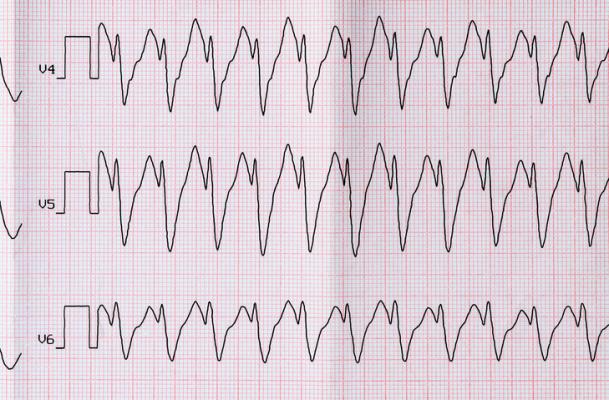
ECG with paroxysm correct form of atrial flutter. Getty Images
December 23, 2020 — The American College of Cardiology (ACC) and the American Heart Association (AHA) has made two updates to its Clinical Performance and Quality Measures on Atrial Fibrillation or Atrial Flutter. The writing committee for this 2020 document incorporated two changes to performance measures in accordance with the 2019 ACC/AHA/Heart Rhythm Society atrial fibrillation guideline focused update.
The full document is titled "2020 Update to the 2016 ACC/AHA Clinical Performance and Quality Measures for Adults With Atrial Fibrillation or Atrial Flutter: A Report of the American College of Cardiology/American Heart Association Task Force on Performance Measures."[1]
Atrial fibrillation (AF or Afib) increases the risk of ischemic stroke five fold, and in the setting of mitral stenosis it drives up the risk of stroke twenty fold over that of patients with a normal heartbeat. Atrial flutter also significantly raises the chance of stroke, and the likelihood increases with certain risk factors.
The first change in the document, which is incorporated into all the performance measures, is the definition of valvular atrial fibrillation, including for patients with either moderate or severe mitral stenosis or those with a mechanical prosthetic heart valve. The second change, which only applies to the performance measure of anticoagulation prescribed, is the different CHA2DS2-VASc risk score treatment thresholds for men (greater than one) and women (greater than two), further demonstrating that the risk of stroke differs for men and women with atrial fibrillation or atrial flutter. The CHA2DS2-VASc calculates stroke risk for patients with atrial fibrillation based on age, sex and clinical factors. Successful implementation of these updated performance measures by clinicians and health care organizations will lead to quality improvement for adult patients with atrial fibrillation or atrial flutter.
TOP 5 TAKE-HOME MESSAGES
The Heart Rhythm Society (HRS) offered these key takeaways for the new 2020 atrial fibrillation or atrial flutter guidelines:
- This document describes updates to the atrial fibrillation performance measures that are appropriate for public reporting or pay-for-performance programs.
- The performance measures are taken from the 2019 American College of Cardiology/American Heart Association/Heart Rhythm Society atrial fibrillation guideline update and are selected from the strongest recommendations (Class 1 or 3).
- Quality measures are provided that are not yet ready for public reporting or pay-for-performance programs but might be useful for clinicians and healthcare organizations for quality improvement.
- The recent guideline change regarding the definition of valvular atrial fibrillation is now incorporated into the performance measures. This includes patients with moderate or severe mitral stenosis and those with a mechanical prosthetic heart valve.
- The recent guideline changes regarding different CHA2DS2-VASc risk score treatment thresholds for men (>1) and women (>2) are now incorporated into the performance measures.
The 2020 Update to the 2016 ACC/AHA Clinical Performance and Quality Measures for Adults With Atrial Fibrillation or Atrial Flutter is publish online in the Journal of the American College of Cardiology and Circulation: Cardiovascular Quality and Outcomes. It was developed in collaboration with the Heart Rhythm Society (HRS).
Reference:

 April 02, 2026