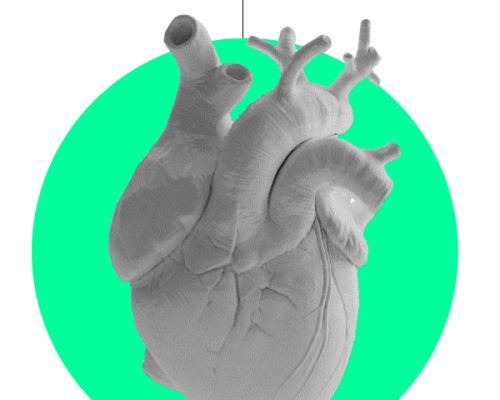
Photo: UltraSight
March 18, 2026 — UltraSight will present six clinical studies validating the performance of its UltraSight Echosystem at the 2026 American College of Cardiology’s Annual Scientific Session & Expo (ACC.26). The studies, conducted in collaboration with Mayo Clinic, confirm that the UltraSight Echosystem enables healthcare professionals without prior sonography training to acquire diagnostic-quality cardiac ultrasound images with greater than 95% accuracy across multiple patient populations and care settings.
The six abstracts represent one of the largest bodies of prospective clinical evidence to date evaluating AI-guided cardiac ultrasound performed by novice users. The findings establish that the UltraSight Echosystem extends high-quality cardiac imaging beyond the echo lab. UltraSight Echosystem enables earlier detection, scalable monitoring, and workflow transformation across the care continuum.
“The data to be presented at ACC.26 confirm what clinicians have been seeing in practice for some time: the UltraSight Echosystem can extend diagnostic-quality cardiac imaging beyond the echo lab into oncology clinics, primary care settings, and acute care environments, even in the hands of those with no prior ultrasound experience. Across multiple patient populations and care environments, novice users achieved greater than 95% diagnostic accuracy. That is the level of evidence health systems need to confidently expand access to cardiac imaging,” said Andrew Goldsmith, MD, MBA, Medical Director at UltraSight.
Key Clinical Findings
The six studies to be presented at ACC.26 cover three critical areas of cardiovascular care, each demonstrating that the UltraSight Echosystem delivers diagnostic performance equivalent to expert echocardiography while being performed by staff without prior sonography training.
1. Transforming Early Detection & Screening
In a featured study on Structural Heart Disease (SHD), researchers combined AI-enhanced ECG with the UltraSight Echosystem’s AI-guided focused cardiac ultrasound (AI-FoCUS). The two-step pathway (AI-ECG followed by AI-FoCUS) achieved 77.6% sensitivity and 99.5% specificity for detecting conditions including cardiomyopathy and amyloidosis, potentially reducing the need for comprehensive echocardiography by 52% while maintaining high diagnostic accuracy.
In a second screening study on Aortic Stenosis (AS), novice users guided by the UltraSight Echosystem detected moderate-or-greater AS with 99.1% accuracy, which establishes a potential new scalable pathway for low-cost population screening.
2. Expanding Access in Specialized Care: Oncology & Heart Failure
In Cardio-Oncology, novice users achieved 100% sensitivity for detecting Left Ventricular Ejection Fraction below 40% in patients receiving chemotherapy, with 98.8% overall agreement with expert echocardiography. This establishes a replicable model for scalable cardiac surveillance in cancer centers – without overburdening echo labs – or in low-resource areas where routine surveillance echocardiography is more challenging.
In Heart Failure, two complementary studies extend the evidence for bedside assessment. Novice-acquired lung ultrasound and mitral Doppler inflow assessment showed significant correlation with elevated invasive pulmonary capillary wedge pressure (p<0.0001) thus validating AI-guided ultrasound as a frontline tool for evaluation of patients with acute decompensated heart failure. A second study demonstrated that a deep learning model can estimate
Left Ventricular Enlargement (LVE) from novice-acquired scans without requiring patient height or weight data, achieving diagnostic accuracy equivalent to expert interpretation (AUC 96.0%).
3. Validating Scalability & Precision at Scale
A large independent validation study confirmed that a new cohort of novice scanners, using the UltraSight Echosystem, achieved 99.8% accuracy for detecting ejection fraction below 40%, demonstrating that the platform’s performance is reproducible across new users, new sites, and real-world clinical conditions.
“These studies demonstrate that AI-guidance fundamentally improves on how, where, and by whom focused cardiac ultrasound can be performed,” said Jared Bird, MD, Associate Professor of Cardiology at Mayo Clinic and principal investigator of the studies. “Across screening, surveillance, and workflow deployment, users with no prior ultrasound training acquired images to answer clinical questions with diagnostic accuracy that holds up against expert echocardiography. I am excited to see how the technology continues to evolve as it is applied to additional clinical care settings.”
For more information, please visit https://ultrasight.com/.
 June 22, 2026