Technology | February 25, 2010

Cardiac MRI Efficiency Increased With New Software


Increased productivity in cardiovascular MRI is possible with a new generation of Tim (total imaging matrix) technology and the introduction of Dot (day optimizing throughput) engine from Siemens. Tim and Dot deliver patient-centered care and significantly improve productivity across the entire MRI workflow. Tim 4G is the fourth generation of Tim, which has more than 5,000 installations worldwide. Tim 4G offers ultrahigh density coils with 204 coil elements and up to 128 channels, DirectRF and other features for improved flexibility, accuracy and speed.   
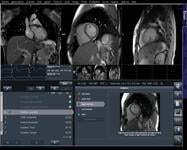
Dot is MRI’s first throughput engine and makes it easy to get the best possible results for virtually any type of patient, providing uniquely tailored, optimized scans configurable to patient condition or clinical question. With real-time on-board guidance, Dot guides the user, step by step through exams, providing instant help, how-to descriptions, and example images, readily, within view. With the Cardiac Dot Engine even the complex cardiac examinations are becoming more routine. Using anatomical landmarks, standard views of the heart, such as dedicated long axis and short-axis views are easily generated and can easily be reproduced using different scanning techniques. Scan parameters are adjusted to the patient’s heart rate and automatic voice commands are given. 
Initial studies at the Royal Bournemouth Hospital in the United Kingdom allowed all 16 technologists on staff to perform Cardiac Stress exams compared to only two technologists prior to using the Cardiac Dot Engine.  
Information about this Tim G4 and Dot is being provided for planning purposes. The product is pending 510(k) review, and is not yet commercially available in the U.S
 
For more information: www.siemens.com/healthcare 


Related Content

News | Magnetic Resonance Imaging (MRI)

May 1, 2026 — Philips has received FDA 510(k) clearance for its Smart Fit TorsoCardiac 1.5T coil, a lightweight and ...

Home May 14, 2026
Home
News | Magnetic Resonance Imaging (MRI)

March 26, 2026 —The heart’s ability to use oxygen efficiently is a critical indicator of its health, but tests to ...

Home March 30, 2026
Home
News | Magnetic Resonance Imaging (MRI)

March 25, 2026 A Penn Medicine–led team has developed a first‑of‑its‑kind artificial intelligence system that interprets ...

Home March 27, 2026
Home
News | Magnetic Resonance Imaging (MRI)

Jan. 20, 2026 — Polarean, a commercial-stage medical imaging company advancing functional MRI of the lungs, has expanded ...

Home January 21, 2026
Home
News | Magnetic Resonance Imaging (MRI) | Children's Hospital Los Angeles

Oct. 28, 2025 — Bronchopulmonary dysplasia (BPD) is the most common — and most serious — complication of extreme ...

Home October 31, 2025
Home
News | Magnetic Resonance Imaging (MRI)

May 12, 2025 — GE HealthCare recently unveiled Signa Sprint, an FDA 510(k) pending[1] ultra-premium wide bore 1.5T high ...

Home May 12, 2025
Home
News | Magnetic Resonance Imaging (MRI)

Nov. 21, 2024 — Royal Philips plans to unveil its next-generation 1.5T BlueSeal MR wide-bore scanner at RSNA 2024 in ...

Home November 21, 2024
Home
News | Magnetic Resonance Imaging (MRI)

February 21, 2024 — Hyperfine, Inc., a groundbreaking health technology company that has redefined brain imaging with ...

Home February 21, 2024
Home
News | Magnetic Resonance Imaging (MRI)

November 17, 2023 — Researchers from the University of Minnesota Medical School examining the cause of cardiomyopathy ...

Home November 17, 2023
Home
News | Magnetic Resonance Imaging (MRI)

June 28, 2023 — Liver disease, the UK’s third leading cause of premature death, poses a significantly greater threat to ...

Home June 28, 2023
Home
Subscribe Now