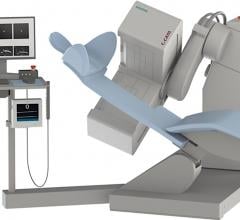
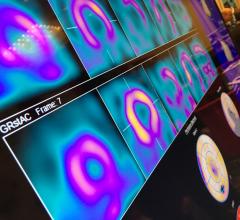
Cardiac PET/CT represents a major advancement in cardiovascular diagnostics, offering significant clinical and operational advantages over traditional methods such as SPECT imaging. Its precision, safety and efficiency are transforming how clinicians diagnose, treat and manage heart disease — delivering faster results, greater accuracy and improved patient outcomes.
1. Superior Diagnostic Accuracy
Compared to treadmill and SPECT imaging, Cardiac PET/CT achieves a higher level of accuracy1 in detecting coronary artery disease and other cardiac conditions. The technology provides precise, quantitative measurements of myocardial blood flow that confirm diagnoses and guide more targeted treatment strategies. This higher level of precision greatly reduces the risk of false positives or negatives, ensuring patients receive the correct diagnosis and appropriate therapy the first time. By offering measurable data instead of subjective interpretation, Cardiac PET/CT supports confident clinical decision-making and more individualized care.
2. Safety and Efficiency
Beyond accuracy, Cardiac PET/CT delivers meaningful safety and efficiency benefits. The technology requires significantly lower radiation exposure than SPECT2, minimizing patient risk without sacrificing image quality. PET imaging is also faster — images can be acquired in as little as five minutes, with the full study often completed within 30 minutes. That efficiency improves workflow, reduces time spent in the clinic and increases patient throughput, all while maintaining diagnostic excellence. For busy cardiology practices, these advantages translate into a smoother patient experience and more cost-effective operations.
3. Enhanced Patient Convenience
For patients, Cardiac PET/CT provides a faster, more comfortable alternative to traditional stress tests, which can be lengthy and physically taxing. PET/CT is non-invasive and typically completed in under an hour3. High-resolution, attenuation-corrected images eliminate the need to account for factors that might otherwise compromise diagnostic integrity1. This level of image clarity ensures accurate results and a better overall experience for patients, allowing clinicians to focus on personalized care rather than procedural limitations.
4. Improved Prognostic Capabilities
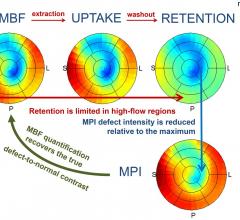
Cardiac PET/CT also extends beyond diagnosis by offering powerful prognostic insights. The ability to measure absolute myocardial blood flow adds objective data to visual interpretations, helping clinicians detect multivessel disease, evaluate responses to treatment, and track the impact of lifestyle changes or risk factor management. These insights help predict the likelihood of future cardiac events, enabling more proactive and personalized care. By identifying issues earlier and more accurately, providers can intervene before severe complications arise — improving long-term outcomes while optimizing resource use.
5. Enhanced Clinical Decision-Making
In addition, PET/CT enhances clinical decision-making by providing a comprehensive view of coronary physiology and anatomy. Measuring coronary flow reserve2 gives cardiologists essential information to complement catheterization data, guiding decisions about revascularization, treatment pathways, and ongoing care strategies. This complete physiological picture helps determine disease severity with precision and supports evidence-based therapeutic planning1. In an environment where value-based care and outcome-driven performance are increasingly emphasized, Cardiac PET/CT stands out as both a clinically and economically advantageous tool.
Cardiac PET/CT: Superior Accuracy, Safety and Value
Overall, Cardiac PET/CT delivers a greater combination of diagnostic accuracy, safety, efficiency and patient-centered design. It represents a new standard for cardiac imaging — enabling faster diagnoses, improved prognostic confidence and enhanced clinical outcomes. For healthcare organizations, adopting this technology means not only offering best-in-class imaging but also improving operational effectiveness and patient satisfaction.
CDL Nuclear Technologies’ Comprehensive Cardiac PET/CT Solutions

CDL Nuclear Technologies understands the growing need for scalable, cost-effective Cardiac PET/CT solutions that fit a variety of clinical settings. The company offers a comprehensive range of deployment options tailored to each practice’s unique needs. Their on-demand Rubidium-82 services allow providers to access PET imaging without the upfront investment in equipment or staff. For facilities looking to expand reach and capacity, CDL’s fully equipped Mobile Cardiac PET/CT Trailers deliver high-performance imaging directly to the point of care. And for institutions seeking a permanent, integrated solution, CDL provides complete design and implementation support for on-site PET/CT suites.
From initial assessment through full integration and ongoing operational support, CDL Nuclear Technologies partners with healthcare organizations to make advanced cardiac imaging accessible, efficient, and sustainable. With end-to-end expertise and a commitment to clinical excellence, CDL helps practices elevate their diagnostic capabilities and enhance patient care. As the future of cardiac imaging continues to evolve, switching to Cardiac PET/CT represents an opportunity to embrace innovation that delivers measurable value — improving diagnostic precision, patient safety, and the overall quality of cardiac care.
Learn more about how CDL Nuclear Technologies can help bring Cardiac PET/CT to your practice at CDLnuclear.com.
References
- Bateman TM et al. J Nucl Cardiol. 2016;23: 1227-1231
- Bateman TM et al. J Nucl Cardiol. 2006;13: 24-33
- Bateman TM J Nucl Cardiol. 2012;19: 3-11

 August 03, 2023