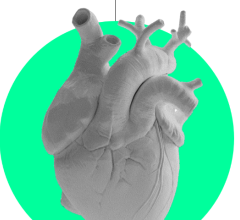
January 23, 2014 — Up to 30 percent of heart attack patients suffer an additional heart attack because of limited ability to control inflammation inside heart arteries that leads to clots rupturing and myocardial infarction or stroke.
An international research team, led by Icahn School of Medicine at Mount Sinai investigators, designed and tested a high-density lipoprotein (HDL) nanoparticle loaded with a statin drug. In mouse studies, they show HDL nanotherapy is capable of directly targeting and lowering dangerous inflammation in blood vessels.
HDL nanotherapy could potentially avert repeat heart attacks and may also reduce recurrent strokes caused by clots in brain arteries.
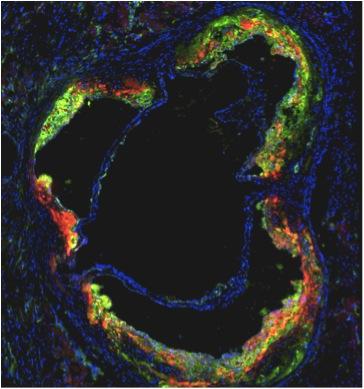
The nanoparticles resemble HDL cholesterol particles and bind to the same receptors as natural HDL in order to deliver the statin drug. Oral statin medications work primarily in the liver to reduce levels of unhealthy lipids circulating in the blood. Statins also exert a very weak dampening effect on some inflammatory cells, foremost macrophages that hide in plaque in arterial walls. Researchers sought to bolster this anti-inflammatory function in their HDL nanotherapy design.
“Levels of inflammation spike after a heart attack, which is why up to 30 percent of heart attack patients may suffer another heart attack, some while in hospital or just after discharge,” said co-author Zahi Fayad, Ph.D., professor of radiology and director of the Translational and Molecular Imaging Institute at Icahn.
According to Mount Sinai researchers, the best way to use their HDL nanotherapy is by injection after the clot that produces a heart attack or stroke has been treated. The HDL nanoparticle would deliver the statin directly to macrophages that are driving the inflammatory response.
“Our study also confirms that the HDL nanoparticle is not seen as a foreign invader by the body’s immune system and that it has an inherent and natural affinity to target plaque macrophages,” said first author Jun Tang, Ph.D, M.S.
The team intends to conduct a clinical trial to test the HDL nanotherapy on humans.
For more information: www.mountsinai.org
 September 02, 2026