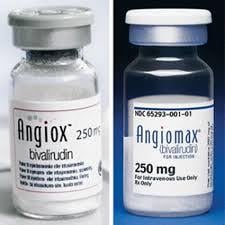
September 1, 2015 — Extending treatment with the anticoagulant bivalirudin for at least four hours after completion of percutaneous coronary intervention (PCI) does not improve outcomes compared to stopping the treatment immediately after the procedure, according to results from the MATRIX Treatment Duration trial.
“Post-PCI bivalirudin did not reduce the composite outcome of ischemic and bleeding outcomes, including stent thrombosis risk, as compared to no post-PCI bivalirudin infusion,” reported lead investigator Marco Valgimigli, M.D., Ph.D., the Swiss Cardiovascular Center in Bern, Switzerland.
The data was presented this week at the European Society of Cardiology (ESC) annual meeting in London.
The results, presented as a Hot Line at European Society of Cardiology (ESC) 2015 congress, with simultaneous publication in the New England Journal of Medicine, leave open the debate about prolonging or discontinuing post-PCI bivalirudin.
“Both treatment options are allowed per current European label and observational studies,” said Valgimigli. “Hence, I believe the option to prolong or stop bivalirudin infusion after PCI remains open for clinicians, who will have to decide based on the ischemic and bleeding risk of individual patients as well as perhaps based on type of acute coronary syndrome, timing of loading dose and type of oral P2Y12 inhibitors. This is in keeping with the current labeling of the drug in EU and USA.”
The 78-centre study, included 3,610 patients with acute coronary syndrome, randomized to receive bivalirudin either during PCI only (n=1,188), or both during and after the procedure (n=1,799).
The drug was administered according to the product labeling, with a bolus of 0.75 mg per kilogram followed immediately by an infusion of 1.75 mg per kilogram per hour until completion of PCI.
For patients receiving prolonged treatment, the post-PCI dose could be either the full dose for four hours or a reduced dose of 0.25 mg per kilogram per hour for at least six hours, at the discretion of treating physicians.
Rates of the primary outcome - a composite of urgent target vessel revascularization, definite stent thrombosis, and net adverse clinical events up to 30 days — were similar in both groups (11 percent of patients with post-procedure bivalirudin versus 11.9 percent of patients with none; relative risk [RR] 0.91; P=0.34).
Bleeding was assessed according to three scales: BARC (Bleeding Academic Research Consortium), TIMI (Thrombolysis In Myocardial Infarction) and GUSTO (Global Utilization of Streptokinase and Tissue Plasminogen Activator for Occluded Coronary Arteries).
“One interesting observation is that the post-PCI bivalirudin regimen, whether the full 1.75 mg dose, or the low 0.25 mg regimen, may be a treatment modifier,” Valgimigli said. “I would like to caution against the over interpretation of these results as the choice of post-PCI bivalirudin regimen was not randomized, but rather left to the discretion of the investigators. However, taking these words of caution into great account, what we saw is that the full dose regimen may be able to significantly reduce stent thrombosis risk without increasing bleeding. This may be in keeping with previous observations from the EUROMAX trial.”
For more information: www.escardio.org

 August 28, 2026