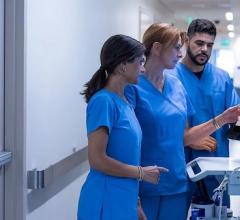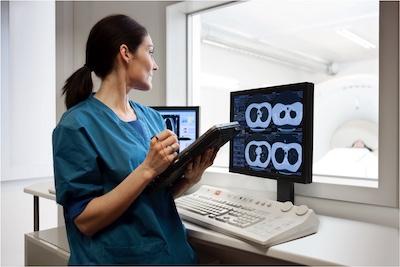
Clinicians are increasingly able to visualize anatomy and physiology in ways that directly inform intervention strategies All photos: CitiusTech
The last few decades have been marked by rapid advances in cardiovascular medicine, particularly in areas like imaging, data systems and electrophysiology. However, all these advances were happening in silos, resulting in highly sophisticated but fragmented systems. Cardiovascular medicine is now entering a phase where progress is defined not by innovation in isolation, but by how effectively those breakthroughs are connected.
At the center of this shift is a redefinition of how cardiovascular care is delivered. Traditionally, cardiology has been organized around specific modalities like imaging and electrophysiology, with data systems functioning as passive repositories. With newer technologies like artificial intelligence (AI), it is possible to create systems that can seamlessly work together for more informed and patient-centric care.
The result is a procedure-centric model of care which enables early detection, precise planning, intervention and follow-ups through a continuous digital thread. It’s about an integrated system that can function as a coherent whole rather than in silos.
AI — Part of the Clinical Workflow
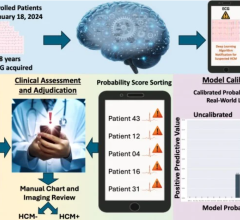
AI plays a critical role in enabling this transition. It’s not only about how sophisticated the algorithm is, but where it sits within the clinical workflow. For the longest time, AI was either used for retrospective analysis or for an experimental pilot. Now, AI is being directly embedded into clinical workflows. This integration happens at multiple points of care delivery and supporting image acquisition, enhancing reconstruction quality, automating segmentation and providing real-time decision support.
AI is emerging as a common thread running through the entire cardiology care pathway. For instance, in non-invasive cardiology, AI is improving speed and accuracy. Imaging modalities are producing higher-resolution data at faster acquisition times, and AI is helping translate that data into clinical insights with less manual effort. In invasive settings, AI is beginning to assist in procedural planning, guiding device sizing, predicting outcomes and supporting intra-procedural navigation.
Imaging's Role is Expanding
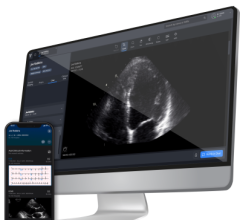
Cardiac imaging, which includes ultrasound, CT, MRI and cath-lab X-ray, is showing marked improvements like faster acquisition, higher resolution images and visualization sophistication. Advances in imaging are not just about clarity or speed; they are about actionability. As a result, imaging is finding applications beyond just diagnostics, like enabling procedural guidance and post-procedural assessments.
Clinicians are increasingly able to visualize anatomy and physiology in ways that directly inform intervention strategies. In areas like echocardiography, CT and MRI, there is closer integration with planning tools, procedural guidance systems in TAVR and post-procedure follow-up workflows. In structural heart disease, this integration is already clinically mature. For complex coronary cases and electrophysiology procedures, the use of imaging for procedural guidance is only increasing.
Beyond hardware advances, this is made possible by an evolving data architecture that allows images to move fluidly across care teams and feed case planning registries. It requires a coming together of several different systems since high-quality imaging technology must be supported by an infrastructure framework that can receive and act on these inputs.
The Digital Backbone
Cardiovascular information systems (CVIS) and digital infrastructure have historically lagged the clinical capabilities they were meant to support. This gap is narrowing, with significant improvements in data integration, remote access and device and fleet management. These are the foundational and fundamental systems upon which the healthcare system is built. Better structured reporting and cleaner pathways from imaging into registries and enterprise systems translate into cleaner interoperability between cardiology systems and broader enterprise health records.
This improved integration is enabling seamless data flow across different parts of the CVIS, enhancing clinical communication and data usability. Remote access capabilities are expanding, allowing clinicians to review information and collaborate across locations. Data can move seamlessly across broader enterprise systems, supporting research and population health initiatives. This makes it easier to detect a pattern across a population and identify a high-risk patient in time or make data from an earlier imaging procedure available in the cath lab. The maturing of this functional digital backbone and infrastructure layer means a more coordinated, data-informed model of care where clinical Intelligence accumulates and compounds across multiple interactions rather than having to be generated from scratch each time.
Transcatheter and EP Innovation
Improvements in imaging and digital workflows make for better guided and planned structural heart procedures. EP procedures can be more precisely targeted because mapping technology and AI-assisted interpretation have advanced together.
The evolution of the support infrastructure, like remote monitoring systems, data integration and device management, coupled with improvements in transcatheter and EP procedures, has together led to these being made available to a wider set of the population.
Electrophysiology, for instance, is becoming more digitally integrated with mapping systems, imaging and procedural data working together to guide increasingly complex interventions. Innovations such as leadless pacing, renal denervation and new ablation strategies are a part of a broader shift toward minimally invasive, data-driven therapies.

Therapeutics in a More Integrated Context
Pharmacology has always been central to cardiovascular medicine. Now, with better diagnostics and contextual data shaping therapeutic decisions, it is possible to provide targeted treatment strategies that are aligned with individual patient profiles. The integration of imaging and data with therapeutic decision-making is reinforcing a precise and personalized approach to care.
This is reflective of a broader transformation where every component of the cardiovascular system is working in tandem with others. A rapidly maturing support ecosystem that keeps pace with improvements in devices and techniques forms the foundation for a procedure-centric operating model.
Unified Systems
Cardiovascular medicine is moving toward a model in which imaging, data infrastructure, AI, procedural capability and therapeutics are no longer parallel tracks but elements of an integrated and unified system. Each strand comes together to strengthen the whole. Better data makes AI more effective, which in turn will make imaging more actionable. Built with the right architectural frameworks, this has the potential to redefine cardiovascular care.
The emergence of this interconnected system has important implications for clinical practice. It will need new ways of thinking about workflow design, team collaboration and data governance, and clinicians have to engage with the larger system within which they operate, not just their expertise. The transition towards a procedure-centric model will require careful coordination across departments and disciplines and changes in how healthcare institutions operate and support this integration.
The result will be tangible, more precise intervention and more coordinated patient management.
 John Memarian is vice president, medical technology at CitiusTech. He has more than 25 years of clinical and technical experiences with extensive hands-on experiences in both invasive and non-invasive adult and pediatric imaging and surgical procedures. He has held various healthcare executive roles in the provider sector. John has consulting and business development experiences in bioscience, IT Solutions, cloud technologies, enterprise imaging, digital pathology and clinical genomes.
 September 09, 2026