August 16, 2016 — Cardiovascular Systems Inc. (CSI) released procedural and 30-day results from its LIBERTY 360° study in a late-breaking presentation at the 2016 Amputation Prevention Symposium (AMP), Aug. 10-13 in Chicago.
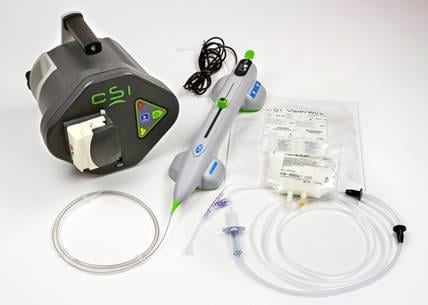
LIBERTY 360° is a prospective, observational, multi-center clinical study evaluating the clinical and economic outcomes of a variety of endovascular interventions in patients with symptomatic peripheral artery disease (PAD), including critical limb ischemia (CLI), the most severe form of PAD. The study includes all commercially available technologies, including CSI’s Diamondback 360 Peripheral Orbital Atherectomy System (OAS), to treat claudication and CLI. The company completed enrollment of 1,204 patients across 51 sites in the United States in February 2016.
The LIBERTY study includes patients with various levels of PAD ranked on the Rutherford Classification scale. Included in the analysis are 500 Rutherford Class 2-3 patients, 589 Class 4-5 patients and 100 Class 6 patients, those with the most severe form of PAD. The study shows that peripheral interventions can be used successfully across all Rutherford classes, including the most challenging Rutherford Class 6. The majority of devices used were balloons and atherectomy, and the Diamondback OAS was the most frequently used atherectomy device, representing approximately 45 percent of Rutherford Classes 2-5 and over 60 percent of Rutherford Class 6 interventions.
George Adams, M.D., director of Cardiovascular and Peripheral Vascular Research at Rex Hospital in Raleigh, N.C., presented the 30-day results highlighting the freedom from major adverse events (MAE). Additional authors on the abstract are: Jihad Mustapha, M.D., Metro Health Hospital, Mich.; William Gray, M.D., Lankenau Heart Institute, Penn.; Gary Ansel, M.D., Berger Hospital, Ohio; and Michael R. Jaff, M.D., Massachusetts General Hospital.
LIBERTY 30-day outcomes can be seen in the chart below:
|
|
|
|
Rutherford Class |
|||||||||
|
|
|
|
R2-3 |
|
|
|
R4-5 |
|
|
|
R6 |
|
|
Freedom from MAE (30-Day) |
|
|
|
99.0% |
|
|
|
95.7% |
|
|
|
90.7% |
|
Major Amputation |
|
|
|
100% |
|
|
|
98.8% |
|
|
|
95.8% |
|
Target Vessel Revascularization (TVR) |
|
|
|
99.4% |
|
|
|
96.9% |
|
|
|
97.9% |
|
Death |
|
|
|
99.6% |
|
|
|
99.7% |
|
|
|
95.9% |
Quality of life also improved from baseline across all Rutherford classes.
“The results from the LIBERTY 360° study will provide us with valuable information about the clinical and economic outcomes of atherectomy in PAD patients,” said Adams. “This is the first device study to specifically include patients with a prevalence of calcification across all Rutherford Classes, particularly the most severe form of PAD, Rutherford Class 6. Approximately 50 percent of lesions showed visible calcification on angiography, and we saw a freedom from MAE rate of 90.7 percent for Rutherford Class 6 patients at 30 days. Future data will be essential in identifying the most effective ways to treat this challenging patient population.”
Mustapha said, “Procedural complications rarely resulted in post-procedural hospitalization in all Rutherford Classes and, impressively, 78 percent of Rutherford Class 6 subjects were discharged to their homes.” He concluded, “Early findings in this novel, all-comers PAD study suggest that ‘watchful waiting’ in Rutherford Class 2-3 and ‘primary amputation’ in Rutherford Class 6 may not be necessary. Percutaneous vascular interventions can be successful in these patient populations as well.”
For more information: www.csi360.com

 November 08, 2024