March 15, 2018 — Women diagnosed with preeclampsia during pregnancy were significantly more likely to develop high blood pressure, diabetes or high cholesterol within five years compared with women who did not have preeclampsia, in a study being presented at the American College of Cardiology’s 67th Annual Scientific Session.
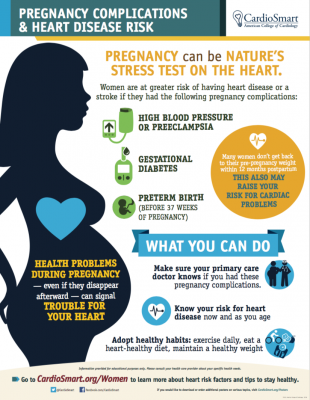
The study is among the first to track outcomes following a diagnosis of preeclampsia and bolsters the evidence that preeclampsia contributes to cardiovascular risk factors that were not present before pregnancy. The study, which followed women for five years, also found few women received medical follow-up aimed at preventing cardiovascular problems after preeclampsia.
Preeclampsia is a dangerous condition in which a pregnant woman develops high blood pressure and protein in the urine. Delivering the baby is the only known cure. Symptoms typically resolve within six weeks after delivery, contributing to a perception among care providers and patients that further medical monitoring is unnecessary.
However, previous studies have found women who had preeclampsia during pregnancy face a substantially higher risk of coronary heart disease, stroke and heart failure later in life. These new findings indicate signs of heart disease risk can often emerge in the first few years after a woman experiences preeclampsia.
“As providers, we’re missing the boat if we’re not adequately following up with these patients on their cardiovascular risk factors,” said Karlee Hoffman, D.O., cardiology fellow at Allegheny Health Network and the study’s lead author. “Women are highly motivated to take care of themselves when they are pregnant and after they deliver their babies, so it’s a great time to educate them on long-term cardiovascular risks and potentially intervene with aggressive lifestyle modification.”
Preeclampsia occurs in up to 7 percent of all pregnancies. However, it appears to be on the rise, potentially due to an increase in the number of women becoming pregnant after age 35.
Researchers analyzed the health records of more than 650 women treated at Allegheny Health Network between 2009 and 2015. Half had been diagnosed with preeclampsia and half were women of a similar age and racial makeup who had never had a preeclampsia diagnosis (controls). Five years of follow-up health information was available for just over 250 of the women diagnosed with preeclampsia.
Around the time of their delivery, those with preeclampsia had a higher rate of obesity, preterm delivery, babies with low birth weight and post-delivery complications. Over the following five years, those with preeclampsia were more likely to develop high blood pressure (which occurred in 32.8 percent of women with preeclampsia and 0.3 percent of controls), new-onset diabetes (which occurred in 21 percent of women with preeclampsia and zero among controls) and high cholesterol (which occurred in 3 percent of women with preeclampsia and zero among controls).
Of those who had a follow-up with a primary care physician after a diagnosis of preeclampsia, only one patient’s chart noted the doctor was aware of the preeclampsia diagnosis and mentioned long-term follow- up with regard to cardiovascular disease.
“The incidence of preeclampsia is relatively high and so is the risk of having a subsequent diagnosis of these cardiovascular risk factors,” Hoffman said. “We need to work with our obstetrics and gynecology colleagues to capture these patients and refer them to a primary care doctor or a cardiologist for more rigorous follow-up to help prevent future cardiovascular disease.”
“The results also showed that African-American women, women who were older at the time of their pregnancy and women with a prior history of high blood pressure or diabetes faced an especially elevated risk of high blood pressure following preeclampsia, suggesting women with these risk factors should receive even more rigorous medical follow-up,” Hoffman said.
Although the exact causes are unknown, it is thought that oxidative stress, which results from having too much of the unstable form of oxygen in the body, could play a role in the cardiovascular effects seen after preeclampsia. Oxidative stress has been linked with the physiological changes that contribute to coronary artery disease. To further elucidate the connections between preeclampsia and heart disease, researchers are planning a study that will use echocardiography and noninvasive pulse wave velocity to investigate heart health after preeclampsia.
For more information: www.acc.org
Related Women's Heart Health Content:
New Advice Will Help Women with Congenital Heart Defects Navigate Pregnancy
Diagnostic Differences in Women’s Heart Health
VIDEO: Differences in Cardiac Complications and Presentation Between Men and Women — Interview with Cindy Grines, M.D.
Pregnancy-Related Heart Failure Strikes Black Women Twice as Often as Other Races
Cardiac Imaging Reveals Roots of Preeclampsia Damage in Pregnant Women
VIDEO: Sex Differences in Diagnosing Heart Disease in Women — Interview with Doreen DeFaria Yeh, M.D.
VIDEO: How to Build a Successful Women’s Heart Center — Interview with Malissa Wood, M.D.
Find more articles on women's heart issues in the Women's Cardiovascular Health channel
Related Content: ACC 2018 Late-Breaking Trials

 April 02, 2026