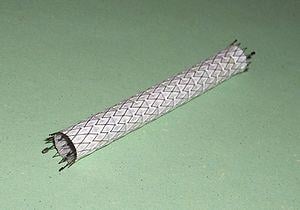
July 18, 2011 — OrbusNeich announced that data from an ex vivo arteriovenous (AV) shunt model of human circulating blood, in addition to results from three preclinical studies, demonstrated that the Genous Stent effectively captures circulating CD34+ endothelial progenitor cells (EPCs). This leads to accelerated re-endothelialization and decreased thrombogenicity compared to bare metal stents (BMS). These mechanistic data were published as an e-publication on the European Heart Journal website.
Data from the study showed that EPC deposition on the struts was enhanced by 32.5 percent compared to BMS. In addition, the expression of specific endothelial markers increased significantly compared to those on the BMS. The data also showed a significant decrease in the expression of thrombotic markers associated with Genous.
"These data demonstrate the effectiveness of the capture of CD34+ cells for endothelialization and the prevention of thrombosis," said Eric J. Duckers, M.D., Ph.D., of the Thoraxcenter at Erasmus University Medical Center in Rotterdam, Netherlands, and senior author of the publication. "This mechanism of early endothelialization supports the usage of Genous' unique EPC capture technology especially for patients who are at higher risk of thrombosis."
For the ex vivo human study, 15 patients undergoing coronary angiography received an extracorporeal femoral AV shunt containing a Genous and a BMS, which were exposed to circulating blood for up to 120 minutes. The cell depositions on the struts were determined by confocal and scanning electron microscopic (SEM) analysis. Expression of endothelial and thrombotic markers was determined using quantitative polymerase chain reaction (qPCR).
"We were able to see a significant difference between the Genous Stent and the bare metal stent in promoting EPC capture and reducing acute thrombogenicity," said Renu Virmani, M.D., of the CVPath Institute Inc. in Gaithersburg, Md., and co-author of the publication. "The Genous Stent appears to not only promote the adhesion of human EPCs, but it also reduces the adhesion of fibrin, platelets and inflammatory cells, all of which are important for the prevention of thrombus."
Further studies validating the EPC capture concept were conducted in vitro and in two animal models. An in vitro cell-capture assay demonstrated a preferential adhesion of human peripheral blood-derived CD34+ cells to Genous, with 86 percent of the attached cells positive for CD34 compared to 26 percent of cells on the BMS. In a baboon AV shunt model, the investigators showed that the stent inhibits in-stent thrombosis, as indicated by a significant increase in platelet deposition on the BMS compared to Genous. In a rabbit endothelial denudation model, qPCR analysis of endothelial marker expression indicated that it significantly promotes re-endothelialization at seven days compared to BMS.
For more information: www.orbusneich.com

 September 02, 2026