July 26, 2016 — On July 20, Massoud Leesar, M.D., of University of Alabama at Birmingham Hospital implanted a patient with Absorb, the world’s first U.S. Food and Drug Administration (FDA)-approved dissolving (bioresorbable) heart stent, for the first time in Alabama.
While stents are traditionally made of metal, the Absorb stent is made of a naturally dissolving material called polylactide, similar to dissolving stitches or sutures.
“Since the Absorb stent gradually dissolves, this may be a safer long-term option for patients because metal stents can clot and occlude the artery,” Leesar said.
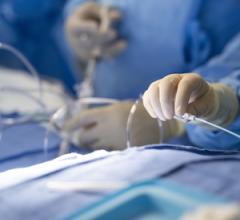
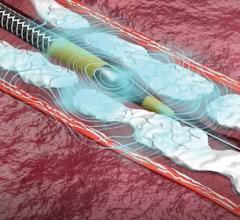
The stent is placed into the artery on a balloon at the end of a thin flexible tube, much like the procedure used to place bare metal and drug-eluting coronary stents. It is then expanded by inflating the balloon that pushes the plaque against the artery wall to enable greater blood flow. The balloon is removed, leaving the Absorb stent to slowly release medication to the diseased area. With blood flow restored, the stent begins dissolving.
After Absorb dissolves, it allows the artery to pulse and flex naturally. It may also reduce the risk of future blockages that occur with metallic stents, and makes it easier for doctors to offer additional interventions in the future if necessary. During the dissolving period, Absorb metabolizes into water and carbon dioxide, two elements that occur naturally in the body. All that remain in the artery are two pairs of tiny metallic markers that enable a physician to see where the device was placed. After three years, the device is completely dissolved and the vessel can remain open and pulsate on its own.
Calvin Burnett of Albertville, Ala., is the first patient in the state to receive the new Absorb stent. After Burnett was diagnosed with rectal cancer in September 2015, his oncologist recommended he see a cardiologist at UAB following complaints of tightness in his chest.
“I’ve always been kind of physically active, so this kind of threw me for a loop,” Burnett said.
Two days after his stress test, an Absorb stent was placed. Burnett said he is grateful that medicine has come so far.
“I think this is such a great thing,” he said. “I’m looking forward to getting back to riding horses.”
To ensure optimal patient selection and implant technique, UAB’s interventional cardiology team underwent extensive training on the new device.
“One of the advantages of this new stent is that the risk of a metal stent’s suddenly clotting is a major issue long-term,” Leesar said. “Since the new stent dissolves over time, this risk can be eliminated, and the vessel has the potential to be open more than to before with the stent.”
Currently, patients who receive the new dissolving stent will have to meet certain criteria. Leesar suggests patients talk with their cardiologists to see if they meet those criteria, and to learn more about the Absorb stent and its capabilities.
For more information: www.abbottvascular.com

 August 28, 2026