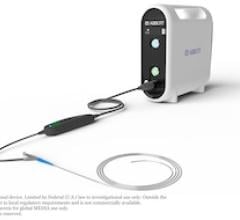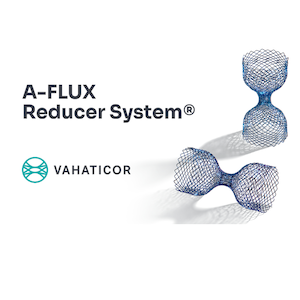
VahatiCor enrolls first U.S. patient in SERRA-I, evaluating the A-FLUX Reducer System, a self-expanding nitinol implant designed to address CMD. Investigational device, not approved by the U.S. FDA for commercial use.(Image: VahatiCor)
June 17, 2026 — VahatiCor, Inc., a medtech company developing interventional therapies for coronary microvascular dysfunction (CMD), today announced the enrollment of the first United States patient in its SERRA-I early feasibility study of the A-FLUX Reducer System. This builds on early human experience from SERRA-I and ongoing enrollment in the SERRA-I European (EU) study.
SERRA-I is evaluating the initial use of the A-FLUX Reducer System in patients with symptomatic CMD. The study is part of the broader SERRA clinical program, with centers across the U.S. and EU. The first U.S. patient was enrolled at Yale-New Haven Hospital, with Samit Shah, MD, PhD, an interventional cardiologist with Yale New Haven Hospital Heart & Vascular Center and assistant professor of medicine at Yale School of Medicine, serving as co-principal investigator of SERRA-I.
"Treating our first U.S. patient brings the A-FLUX Reducer System into U.S. clinical investigation," said Harry D. Rowland, PhD, Chief Executive Officer of VahatiCor. "Cardiology is moving toward treating microvascular disease as a frontline condition, and the A-FLUX Reducer System is built for this shift. I'm grateful to the SERRA-I investigators and to the patients who are making this study possible."
CMD affects millions of patients who experience persistent angina (chest pain) and related symptoms without blockages in the large coronary arteries. The A-FLUX Reducer System is a self-expanding nitinol device, delivered by catheter to the coronary sinus, designed to influence blood flow through the heart's smaller vessels and address the underlying microvascular dysfunction.
"Patients with CMD are highly symptomatic and underserved by current therapies, with no approved option in the United States that directly targets microvascular disease," said Samit Shah, MD, PhD. "Enrolling our first U.S. patient is an important step in generating the evidence these patients need."
 September 02, 2026