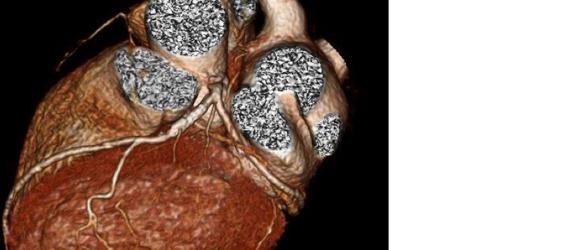
November 18, 2009 – Utilizing newer cardiac computed tomography (CT) machines to find plaque and blockages in the coronary arteries led to better survival among those undergoing the test, according to a study presented Sunday at the American Heart Association Meeting in Orlando, Fla.
Society of Cardiovascular Computed Tomography (SCCT) president-elect, Matthew J. Budoff, M.D., is the study’s lead author and a researcher at the Los Angeles Biomedical Research Institute at Harbor-UCLA Medical Center (LA BioMed). Dr. Budoff said previous studies had found assessing heart disease using CT heart scans could predict overall death risks in most American adults, but did not look at whether the knowledge gained by undergoing the test led to better outcomes.
In the study of 4,224 patients, 60 percent underwent the CT angiography (CTA) and 40 percent did not. Both groups were followed for almost seven years, and then all-cause mortality was assessed. Cardiac patients who did not undergo CTA were almost four-fold more likely to die during follow-up.
“This study indicates that cardiac CT scans can provide patients and physicians an earlier and more accurate evaluation of their coronary arteries than traditional tests,” said Dr. Budoff. “The advanced knowledge clearly allows more aggressive and better treatments to be provided. Previous studies found cardiac CT scans encourage compliance with medications and lifestyles that are protective for coronary health, and to be more accurate than stress tests. This new, large study now shows that outcomes are improved with this knowledge.”
In total, 270 deaths were recorded over 80 months of follow-up. The death rate was significantly lower in the group undergoing the CT angiogram (n=86) as compared to the standard of care group (n=184).
“This study provides significant validation of cardiac CT scans,” said Dr. Budoff. “Improved compliance with therapies, more accurate assessment of risk, and identification of coronary stenosis provide important information in assessing a patient’s overall death risk. With this information, physicians can advise patients on diet, medications, exercise and other lifestyle changes that will help them avoid the risk of heart attack, strokes and other health problems.”
“This is a most important study conducted by Dr. Budoff and echoes the sentiment of the SCCT, which espouses that cardiac CT angiography is the most accurate and noninvasive diagnostic imaging test for the detection of coronary artery disease,” said Dr. Jack Ziffer, Ph.D., M.D., FSCCT chief of radiology at Baptist Hospital and SCCT president.
For more information: www.SCCT.org

 November 03, 2026