October 29, 2010 – An automated anastomosis system to minimize operating time and enable minimally-invasive and robot-assisted coronary artery bypass graft (CABG) surgery is being featured today in several demonstrations and wet lab presentations at the Advances in Robotic and Hybrid Coronary Revascularization conference. The meeting was jointly developed by the International College of Robotic Surgery and Saint Joseph's Hospital in Atlanta.
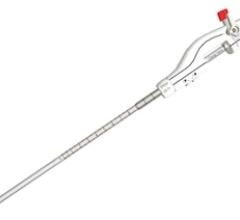
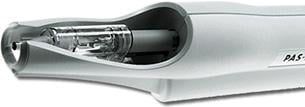
The Cardica Inc. C-Port Flex-A Anastomosis System and its PAS-Port Proximal Anastomosis System are being featured in procedures for beating heart totally endoscopic coronary artery bypass (BH TECAB).
"This inaugural meeting will host more than 100 cardiothoracic surgeons from around the world, and is the first of its kind," said Bernard A. Hausen, M.D., Ph.D., president and CEO of Cardica. "We congratulate the presenting surgeons, who continue to push the envelope and remain on the leading edge of cardiothoracic surgery, and commend the cardiothoracic surgeons and specialists attending the meeting, who are advancing their capabilities in minimally invasive cardiothoracic surgery. This forum represents an ideal interchange to advance the field of less invasive cardiac surgery."
To view a presentation showing Husam Balkhy, M.D., completing a BH TECAB, visit www.cardica.com/presentations/bhtecab/player.html. Cardica's C-Port Distal Anastomosis and PAS-Port Proximal Anastomosis Systems automate the connection of blood vessels (known as anastomoses) during CABG surgery, replacing hand-sewn sutures.
The reliable, automated connection of the vessels is particularly useful for accessing difficult to reach targets. Anastomoses are often considered the most critical step of the bypass procedure. Cardica's PAS-Port proximal system attaches the bypass graft to the aorta, upstream of the occlusion, while Cardica's C-Port Distal Anastomosis Systems connect the bypass grafts to coronary arteries downstream of the occlusion. A triple bypass procedure, for example, requires up to five anastomoses. In many instances, all connections could be performed using Cardica's PAS-Port and C-Port anastomosis systems. Cardica is a co-sponsor of the conference.
For more information: www.cardica.com

 May 05, 2026