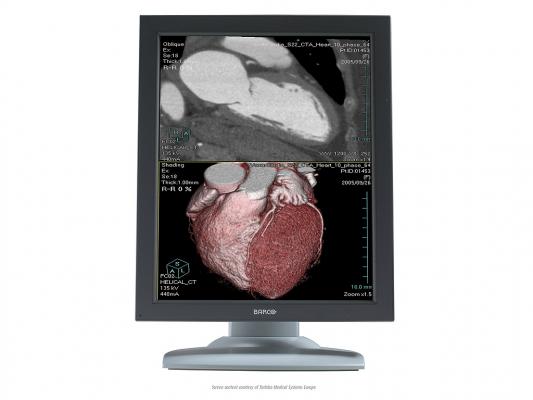
August 14, 2012 — A study led by Kavitha Chinnaiyan, M.D., director of advanced cardiac imaging education, Beaumont Health System (Mich.), has shown that inappropriate CCTA (coronary computed tomography [CT] angiography) use can be reduced by 60 percent with educational programs, increased physician collaboration and close monitoring. The research is published in the Aug. 8 online issue of the Journal of the American College of Cardiology (JACC).
The results come from a multicenter, statewide quality improvement initiative called the Advanced Cardiovascular Imaging Consortium (ACIC), sponsored by Blue Cross Blue Shield/Blue Care Network of Michigan. A total of 47 centers in Michigan took part in the ongoing initiative from July 2007 to December 2010.
"We looked at more than 25,000 patients in the ACIC registry, reviewed data on appropriate use, then had a period of intervention with 5,000 referring physicians across the state offering educational programs, close monitoring and feedback to physicians on CT use," said Chinnaiyan, ACIC program director.
Coronary CT angiography is the fastest growing application of CT scanners in the United States. About 500,000 Americans undergo CCTA each year at an average cost of $500 to $1,500. As it is a relatively new imaging methodology, the statewide collaborative was formed in part to assess how providers should best utilize the technology, while at the same time reducing inappropriate use. After the intervention, there was a follow-up period where appropriate use was reviewed again. It was found that appropriate use increased and inappropriate use decreased by 60 percent across all referring physician specialties, including cardiologists, internists and emergency room physicians.
"The study suggests that voluntary, mutually established quality metrics reinforced by education and feedback can result in major changes in inappropriate use," said Chinnaiyan. "This collaborative approach involving physicians, hospitals and payers may be applied beyond CCTA to enhance value in other areas of medicine."
Earlier this year, ACIC-generated research found that CCTA is more effective than cardiac stress testing at identifying heart disease requiring an expensive, invasive heart catheterization procedure. That research, also authored by Chinnaiyan, was published in the Feb. 14 issue of JACC.
For more information: www.beaumont.edu

 November 03, 2026