News | January 27, 2015

NewYork-Presbyterian Hospital/Columbia University Medical Center Participate in HeartMate III Trial

Device designed to take over pumping ability of weakened left ventricle

Thoratec, HeartMate III, VAD, NewYork Presbyterian, trial, ventricular assist

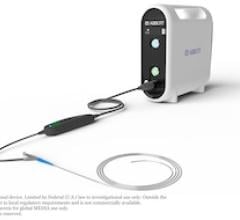
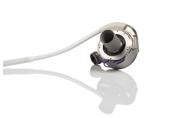
HeartMate III image courtesy of Thoratec


January 27, 2015 — NewYork-Presbyterian Hospital/Columbia University Medical Center is one of a select group of medical centers participating in a clinical trial of a new device for advanced heart failure patients, the Thoratec HeartMate III Left Ventricular Assist System (LVAS). The device is designed to supplement the heart’s pumping function in patients with left-sided heart failure.

Some 5 million people in the United States are afflicted with congestive heart failure. About 50 percent of people who develop heart failure die within five years of diagnosis.

Doctors at NewYork-Presbyterian/Columbia are evaluating the performance and safety of the HeartMate III in subjects with advanced heart failure. They will help determine the device’s efficacy as a long-term support option for patients who are not candidates for heart transplantation and as a short-term support option for patients awaiting a heart transplant. If successful, the device will improve heart function, blood flow and quality of life for these patients.

Sometimes called a “heart pump” or “LVAD,” the HeartMate III is designed to take over the pumping ability of the weakened heart's left ventricle, which pumps oxygen-rich blood from the lungs throughout the body.

The device is implanted above the diaphragm, immediately next to the heart, and attached to the aorta. A centrifugal blood pump is implanted directly onto the patient's heart, leaving natural circulation in place. In addition, the patient wears an external, wearable controller and battery system to power the pump.

The device offers a number of improvements over its predecessors, including smaller size and a design that mimics the natural pulse rate. The device is fully magnetically levitated, so the parts “float” rather than rub together, which should make it more durable.

For more information: www.nyp.org

Related Content

News | Cardiovascular Clinical Studies

May 6, 2026 — Image Analysis Group (IAG), a global imaging CRO headquartered in London, U.K., and HeartcoR Solutions ...

Home May 06, 2026
Home
News | Cardiovascular Clinical Studies

April 9, 2026 — Mount Sinai researchers have created an analytic tool using machine learning that can predict ...

Home April 14, 2026
Home
News | Cardiovascular Clinical Studies

April 13, 2026 —The American Heart Association (AHA) has granted Case Western Reserve University the Rapid Impact ...

Home April 13, 2026
Home
News | Cardiovascular Clinical Studies

April 2, 2026 — Iterative Health and US Heart & Vascular (USHV) have announced a strategic partnership to advance ...

Home April 02, 2026
Home
News | Cardiovascular Clinical Studies

March 4, 2026 — UltraSight, a provider of AI-guided cardiac imaging workflows, has announced Late-Breaking clinical ...

Home March 04, 2026
Home
News | Cardiovascular Clinical Studies

Feb. 9, 2026 — HTA and MedAxiom have opened applications for the 2026 HeartX program, a cardiovascular-focused ...

Home February 18, 2026
Home
News | Cardiovascular Clinical Studies

Jan. 5, 2026 — Medera Inc., a clinical-stage biopharmaceutical company focused on targeting cardiovascular diseases by ...

Home January 05, 2026
Home
News | Cardiovascular Clinical Studies

Nov. 10, 2025 —Genomics, a science-led techbio company, has today announced new research that suggests polygenic risk ...

Home November 12, 2025
Home
News | Cardiovascular Clinical Studies

Oct. 21, 2025 – AskBio Inc., a gene therapy company wholly owned and independently operated as a subsidiary of Bayer AG ...

Home October 21, 2025
Home
News | Cardiovascular Clinical Studies

Aug. 25, 2025 — Merck, known as MSD outside of the United States and Canada, has announced that new clinical trial and ...

Home August 25, 2025
Home
Subscribe Now