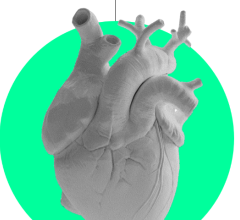
March 12, 2015 — A new study has found that high phosphate levels can cause a stress signal inside the cells that line blood vessels, leading to the release of microparticles that promote the formation of blood clots. The findings, which appear in an upcoming issue of the Journal of the American Society of Nephrology (JASN), provide new insights into how phosphate in the diet can impact heart health.
Inorganic phosphate is a nutrient in nearly all diets. Because patients with chronic kidney disease (CKD) lose the ability to excrete excess phosphate in their urine, the nutrient accumulates in their blood and cells. Such “hyperphosphatemia” is thought to be an important contributor to CKD patients’ increased risk of cardiovascular disease.
To investigate this link, a team led by Alan Bevington, BA, D.P.hil, and Ph.D. student Nima Abbasian, BSc, MSc, University of Leicester, UK, examined the effects of hyperphosphatemia on the cells that form the lining of blood vessels. The researchers’ experiments revealed a mechanism by which an excess of inorganic phosphate—similar to levels found in the blood of CKD patients—causes a stress signal inside these cells. In cells that are stressed in this way, fragments known as microparticles break off from the cells and can promote the formation of blood clots. “This is important because blocking of blood vessels by blood clots—a process known as thrombosis—is a common cause of injury and death, occurring in a wide range of human illnesses including CKD,” said Bevington.
While the effects described in this study are especially relevant to patients with kidney dysfunction who lose the ability to excrete excess phosphate in their urine, nearly all modern Western diets are rich in phosphate, so even healthy individuals with normally functioning kidneys may experience some elevation of blood phosphate levels. In addition, there are a number of metabolic disturbances that can raise phosphate levels inside cells. “It’s possible therefore that the results of this study will also be relevant in other situations in addition to CKD,” said Abbasian.
For more information: www.asn-online.org
 September 02, 2026