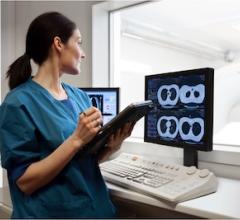
December 21, 2015 — Philips Healthcare introduced ScanWise Implant, the industry’s first magnetic resonance imaging (MRI)-guided user interface and automatic scan parameter selection, at the 2015 Radiological Society of North America (RSNA) annual meeting. The interface is designed to help simplify the scanning of patients with MR conditional implants, such as knee and hip replacements, spine implants, pacemakers and implantable defibrillators. The new software helps users streamline exams and supports diagnostic confidence of this growing patient population.
MRI is a modality of choice for diagnosing conditions such as neurological disorders, cancer, and muscle, joint and back pain. These conditions are most prevalent in older patient populations, and the population with large joint replacements and implanted cardiac devices is expected to increase by about 70 percent over the next five years.
However, implants can create a number of challenges with MRI exams. For example, it is difficult for clinicians to understand and scan within the safety limits defined by each implant manufacturer. These limits are not always clear or easy to implement on the MR scanner, causing patients with MR conditional implants to often be denied MRI exams.
Introducing MRI to a patient’s diagnostic and treatment plan allows clinicians enhanced accuracy and improved workflow, and provides patients with access to better care. According to Harald Kugel, Ph.D., Department of Clinical Radiology, University of Münster, “The previous industry standard was: if patients had an implant, they couldn’t be examined with MR. However, patients deserve the best imaging modality available and shouldn’t be excluded from a modality, because risks aren’t truly known and documented. It’s a milestone achievement that Philips developed an answer for patients with conditional implants to have access to MRIs.”
“From a technologist’s perspective, we’re excited about the prospect of shortening exam times and broadening the diagnostic modalities available for those patients with MR conditional implants,” said Scott Hipko, chief MRI research technologist, The University of Vermont, College of Medicine. “Philips understands the needs of radiologists and brings the expertise needed to create a smart solution to help guide operators to meet the specific criteria for each implant.”
ScanWise Implant is the newest addition to Philips’ advanced diagnostic imaging solutions designed to support first-time-right imaging. Other products within this portfolio include:
- Ingenia 1.5T S, which is designed for first-time-right imaging and increased patient comfort for a faster workflow;
- mDIXON XD, which provides fast, sharp and fat-free imaging for all anatomies, increasing the diagnostic information by providing two contrasts in a single scan; and
- Philips’ MR in-bore experience, which helps to improve the patient experience and utilizes AutoVoice and ComforTone to turn the patient exam into an event.
For more information: www.philips.com

 October 08, 2026