January 8, 2016 — XENiOS announced that its i-COR Synchronized Cardiac Assist system protects left ventricular (LV) function compared to continuous-flow ECLS (extracorporeal life support) in cardiogenic shock.
Study data were presented at the American Heart Association (AHA) annual meeting, Nov. 7-11 in Orlando, Fla., by principal investigator Petr Ošťádal, M.D., Ph.D., Charles University, Na Homolce Hospital, Prague, Czech Republic.
In the Ošťádal study, myocardial hypoxia resulted in a decline in mean (±SD) cardiac output to 2.3±1.2 L/min, systolic blood pressure to 61±7 mmHg and LV ejection fraction (EF) to 21±7 percent. Synchronized pulsatile flow was associated with significant reduction of LV end-systolic volume (ESV), increase in LV stroke volume (SV) and higher EF at all ECLS flow levels compared to continuous ECLS flow. At selected ECLS flow levels, pulsatile flow reduced also LV end-diastolic pressure (EDP), end-diastolic volume (EDV) and systolic pressure (SP).
Patients with cardiogenic shock have a very high mortality rate. It is a medical emergency which shock results from an inadequate circulation of blood due to primary failure of the heart ventricles to function effectively. As this is a type of circulatory shock, there is insufficient perfusion of tissue. The condition involves increasingly more pervasive cell death from oxygen starvation (hypoxia).
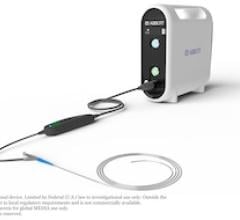
Synchronized cardiac assist overlays or superimposes a physiological pulse wave onto the patient’s weakened pulse. It is designed to be a less invasive treatment than the current standard while using a more physiological treatment designed to be essential to endothelial function, which ensures adequate tissue perfusion in the organs. Maintaining organ function serves to prevent multi-organ failure and to improve clinical outcomes. The energy of synchronized pulsatility in conjunction with the i-cor Synchronized Cardiac Assist device allows for a reduction of invasiveness compared to standard care by reducing blood flow and thus reducing cannula size. As a result, i-cor is designed to offer physiological cardiac assist, protection and safety during interventions in the cardiac cath lab, as well as for the management of cardiogenic shock in the ICU and the cardiac cath lab.
The i-cor device is cleared for sale in Europe but is not cleared for sale in the United States.
For more information: www.xenios-ag.com
 September 02, 2026