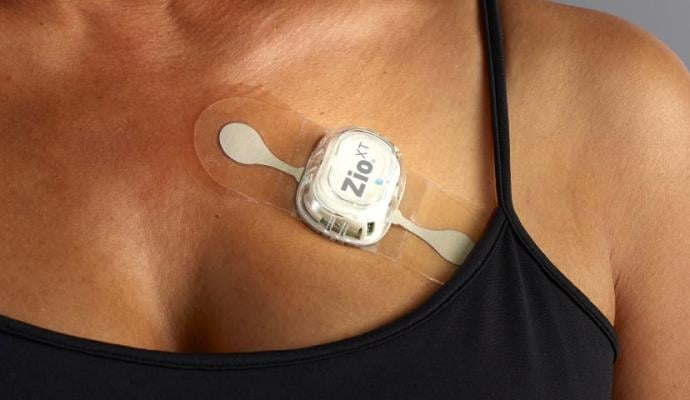
January 3, 2024 — iRhythm Technologies, Inc., a leading digital health care company focused on creating trusted solutions that detect, predict, and prevent disease, announced today that its next generation long-term ambulatory cardiac monitor – the Zio monitor ECG System – has received CE mark certification under the European Union’s Medical Device Regulation 2017/745 (“EU MDR”) from its Notified Body, the BSI Group. The Zio monitor ECG System secured its CE mark based on compliance to EU MDR standards of performance, quality, safety, and efficacy, along with the body of clinical evidence supporting Zio in detecting potential cardiac arrhythmias.
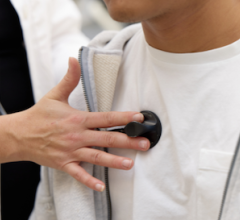
Zio monitor builds on the high performance of Zio XT that, together with its enhanced long term continuous cardiac monitoring service, provides an elevated end-to-end experience to patients with potential arrhythmias and demonstrates 99% patient compliance with prescribed wear times1. The new Zio monitor is thinner, lighter, and smaller compared to Zio XT to provide a more inconspicuous wear experience.2-4. Early clinical and patient experience in the United States has shown that Zio monitor has even better wear times and analyzable ECG2. Furthermore, the certification incorporates CE mark for the ZEUS (Zio ECG Utilization Software) System, iRhythm’s advanced deep-learned AI algorithm which supports the capture and analysis of ECG data recorded by Zio monitor.
“The EU MDR is arguably one of the most stringent regulatory frameworks for product approvals globally that ensures medical devices meet the rigorous standards for healthcare technologies,” said Quentin Blackford, iRhythm President and Chief Executive Officer. “Receiving this CE mark certification for our Zio monitor and ZEUS system reflects our team’s commitment to delivering the highest quality services as we seek to drive better health outcomes and more equitable access for patients around the globe. Our teams did an excellent job to effectively convey the significant body of clinical study evidence underlying our Zio services and our deep-learned AI algorithm5 as key differentiators. With improved clinical accuracy compared to existing traditional Holter monitoring6,7, we look forward to introducing our innovative technology to many more patients in Europe.”
In Europe, there remains significant unmet clinical need for improved arrhythmia detection in many countries as the prevalence of arrhythmias and stroke continues to rise8. With the EU MDR CE mark for the Zio monitor and ZEUS systems in hand, iRhythm plans to continue its market expansion strategy in prioritized countries across Europe where there are approximately 1.8 million ambulatory cardiac monitoring tests performed annually.
For more information: www.irhythmtech.com
References:
- Data on file. iRhythm Technologies, 2022.
- Data on file. iRhythm Technologies, 2023.
- Compared to previous generation.
- Volume reflected in the device housing.
- Hannun, AY. et al. Cardiologist-level arrhythmia detection and classification in ambulatory electrocardiograms using a deep neural network. Nature Medicine, 2019.
- Barrett P. et al. Comparison of 24-hour Holter monitoring vs. 14-day novel adhesive patch electrocardiographic monitoring. American Heart Journal of Medicine, 2014.
- Turakhia, M. et al. Diagnostic Utility of a Novel Leadless Arrhythmia Monitoring Device, American Journal of Cardiology, 2013.
- Mensah, AH. Et al. Global Burden of Cardiovascular Diseases and Risks, 1990-2022. Journal of the American College of Cardiology, 2023.
*Referenced clinical studies and data are based on U.S. subject population.

 June 16, 2026