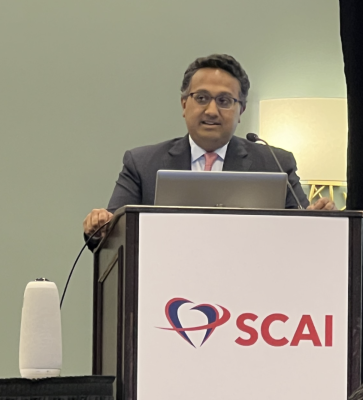
Women and black patients were less frequently treated with minimally invasive therapy compared to men or non-Black patients, according to new data from the REAL-PE analysis which investigated catheter-based pulmonary embolism (PE) treatment. Late-breaking results were presented by lead study author Sahil A. Parikh, MD, Director of Endovascular Services and Professor at Columbia University Irving Medical Center, at the Society for Cardiovascular Angiography & Interventions (SCAI) 2024 Scientific Sessions, held May 2-4 in Long Beach, CA.
May 7, 2024 — Women and black patients were less frequently treated with minimally invasive therapy compared to men or non-Black patients, according to new data from the REAL-PE analysis which investigated catheter-based pulmonary embolism (PE) treatment. The late-breaking results were presented in a session, “Disparities in Pulmonary Embolism Care: Insights from Big Data Analytics” during the recently-held Society for Cardiovascular Angiography & Interventions SCAI 2024 Scientific Sessions. A snapshot summary of the outcomes, as presented in a written statement issued by SCAI, follows.
Study Summary
REAL-PE analyzed data from patients within the Truveta database diagnosed with PE and treated with USCDT or MT for PE. Patient characteristics including race, ethnicity, age, sex, comorbidities, and prior diagnoses were assessed to investigate their association with the type of treatment used. Of the more than 430,000 patients diagnosed with PE, about 2,000 patients analyzed were treated with one of the invasive therapies. Women or black patients were less frequently treated with invasive therapy than men or non-Black patients. Moreover, women more than men and white people more than black people had higher bleeding rates.
Lead Author Sahil A. Parikh, MD Analysis
“Although this data demonstrates the value of real-world data in the assessments of new technologies in which randomized data are not always available, there is still work that needs to be done to evaluate the current utilization of advanced therapies for PE in underrepresented patient populations,” said Sahil A. Parikh, MD, Associate Professor of Medicine and Director of Endovascular Services, Columbia University Irving Medical Center, who was lead author of the study. “Evaluating care disparities in real clinical practices is key to addressing the existing barrier and improving patient outcomes,” Parikh added.
About Pulmonary Embolism
PE is often caused by blood clots in the legs, otherwise known as deep vein thrombosis, that travel through the veins and into the lungs. PE affects around 900,000 people in the U.S. each year, with 10-30% dying within one month of diagnosis. Ultrasound-assisted catheter-directed thrombolysis (USCDT), a common invasive treatment option for PE, enables deeper penetration of the clot-busting medication into the clot, restoring normal blood flow faster. Mechanical thrombectomy (MT), another invasive treatment method has been shown to reduce thrombus burden and pulmonary artery pressure (PAP) and to improve right ventricular (RV) function in patients with high-risk or intermediate-high-risk PE.
The Society for Cardiovascular Angiography & Interventions (SCAI) which was established in 1978, represents itself as the primary nonprofit medical society dedicated to representing invasive and interventional cardiology. Based in Washington, DC, SCAI's mission is to guide the global interventional cardiovascular community by fostering education, advocacy, research, and upholding standards for quality patient care among 4,500 members committed to advancing medical science and providing life-saving care for individuals of all ages affected by cardiovascular disease. Its SCAI Scientific Sessions 2024 were held May 2-4 in Long Beach, CA.
More information: www.scai.org
Find more SCAI 2024 news coverage from DAIC here.

 April 01, 2026