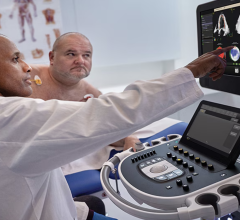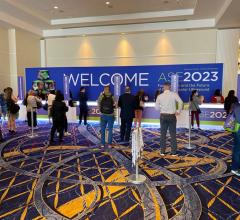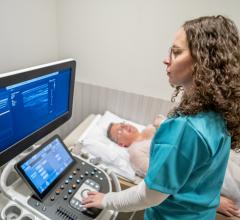
Sept. 23, 2025 — Ultromics, a pioneer in AI-driven cardiology solutions, has announced findings from its new study on artificial intelligence (AI) in echocardiography, presented at the American Society of Echocardiography's (ASE) 2025 Scientific Sessions in Nashville, Tennessee. Published as an abstract in the Journal of the American Society of Echocardiography (JASE), the study points to the growing role of AI in helping doctors find cardiac amyloidosis sooner.
Once diagnosed only after years of unexplained heart failure symptoms, cardiac amyloidosis is now at the center of cardiology. Ads for new drugs are running on primetime TV, specialists are filling conference halls, and with AI able to spot the disease on routine heart ultrasounds, this could support earlier intervention in the disease course, when treatment may offer greater benefit.
Drawing on 4,815 patient cases from 17 hospitals in the United States and the United Kingdom, Ultromics modeled how EchoGo Amyloidosis could improve referral decisions in real-world practice. The AI was able to detect cardiac amyloidosis earlier and more accurately than traditional methods, finding patients who would otherwise have been missed while reducing unnecessary testing. The results held true across both low- and high-prevalence settings, showing the potential impact of AI in everyday clinical practice. Major findings included:
- In low-prevalence scenarios, referral decisions based on wall thickness alone correctly identified ~65% of patients with cardiac amyloidosis. Incorporating AI increased correct referral rates to ~76–80%, meaning more patients could be identified earlier while avoiding unnecessary referrals.1
- In higher-prevalence scenarios, AI could reduce unnecessary referrals by up to 18% while maintaining high detection rates.1
- The findings were consistent across hospitals in the United States and United Kingdom, underscoring the technology's potential for broad clinical use.1
Cardiac amyloidosis is increasingly recognized as a common driver of heart failure. New therapies such as tafamidis and acoramidis can slow disease progression and reduce mortality, but they are effective only when patients are identified early. Unfortunately, up to 66% of cases go undiagnosed in clinical practice.2-4
"Too often, patients with cardiac amyloidosis are diagnosed only after years of unexplained symptoms and irreversible damage," said Dr. Ashley Akerman, Director of Clinical Sciences at Ultromics and lead author of the study. Our findings suggest that using EchoGo Amyloidosis to enhance routine heart scans, doctors could better identify at-risk patients, reduce unnecessary testing, and ensure that those who need confirmatory diagnosis and treatment, receive it sooner."
EchoGo Amyloidosis is designed to help close this diagnostic gap by analyzing echocardiograms at the pixel level to detect subtle patterns often missed by the human eye. Trained and validated on 7,174 patients (9,700+ echo videos) from 15 international sites, and tested on more than 2,700 additional patients across 18 sites, the model achieved high accuracy (AUC 0.93) across multi-ethnic, real-world populations. Its cardiac amyloidosis model provides consistent, automated assessments that help clinicians identify at-risk patients sooner, improve referral decisions for confirmatory testing and connect more patients to life-prolonging therapies.5
This study adds to the growing clinical validation of Ultromics' EchoGo platform, the first FDA-cleared and Medicare-reimbursed AI system for echocardiography. With results documented in more than 25 peer-reviewed studies, EchoGo is already in use at leading U.S. hospitals including University of Chicago Medicine, Northwestern, and City of Hope, where it supports earlier detection of complex cardiovascular conditions and more precise patient management.
For more information, visit www.ultromics.com.
- Akerman AP, et al. J Am Soc Echocardiogr. 2025;38(9S):Axxx.
- González-López E, et al. Eur Heart J. 2015;36:2585–94.
- Hahn VS, et al. JACC Heart Fail. 2020;8:712–24.
- AbouEzzeddine OF, et al. JAMA Cardiol. 2021;6:1267–74.
- Slivnick JA, Hawkes W, et al. Eur Heart J. 2025;ehaf387.

 July 27, 2026