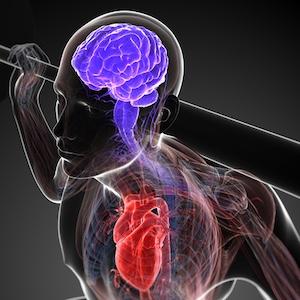
Could a link between the heart, brain and immune system help reduce the occurrence of heart attacks and lessen the aftereffects? Those were the questions researchers at the University of California, San Diego (UCSD) recently sought to answer. The study’s outcomes, published in February, could change the traditional view of heart attacks as solely a structural problem inside the heart, potentially leading to new therapies and multidisciplinary treatment approaches.
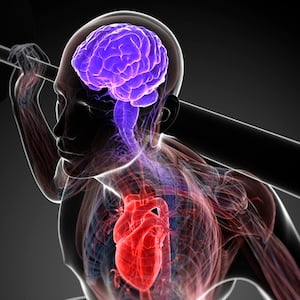
Working in mice, researchers identified a triple-node heart-brain loop, in which sensory neurons in the vagus nerve detect heart injury and relay signals to the brain, activating the immune system. Researchers then performed multiple interventions to disable the loop, resulting in significantly reduced complications in mice post-myocardial infarction (MI).1
“We’ve already seen researchers identify the association between the gut and the brain, so it follows that there’s a connection between the heart and the brain as well,” says geriatrician Sharon Brangman, MD, FACP, AGSF, a McKnight Brain Research Foundation trustee and chair of the Department of Geriatrics at Upstate Medical University in Syracuse, New York. “Research like the UCSD study gives us the impetus to look at traditional illnesses we thought we understood and look more broadly at other systems and how they interact.”
The Brain After a Heart Attack
While not a cardiologist, Dr. Brangman has spent decades treating older adults with conditions such as atherosclerosis and hypertension, and she has performed follow-ups with multiple heart attack patients. She’s also performed extensive research into healthy aging, Alzheimer’s disease and related dementias, giving her a unique outside perspective on the link between brain health and heart attacks.
“In our Cardiac Care Unit, we see people who get agitated or confused after they’ve had an MI,” she says. “A lot of them develop delirium, which is a change in brain function that interferes with clarity of thought and the basic ways brain cells are working. This new research from UCSD raises the possibility that there may be some immune system disorder post-heart attack that is triggering this change in mental status.”
Rethinking Immune System Response
A connection between heart attacks and the immune system offers the most likely bridge to additional interventions for both MI and related co-morbidities such as hypertension, according to Dr. Brangman.
“The immune system protects our body from foreign invaders, typically viruses and bacteria,” she says. “But in the case of an MI, the invader could be cardiac tissue that is getting damaged, causing a reaction similar to diseases like rheumatoid arthritis, Type 1 diabetes, and multiple sclerosis, which also trigger the immune system despite the lack of an infection.
“We also know that people with longstanding hypertension increase their risk of getting cognitive decline and dementia,” she adds. “If there’s a component of hypertension that is triggering the immune system, we may need other interventions beyond traditional antihypertensive drugs.”
Dr. Brangman envisions a day when cardiologists could potentially use monoclonal antibodies or other therapies to calm the immune system and manage cardiovascular disease. “Before that happens, however, we will need to have a better understanding of this immune response and the brain-heart connection,” she says. “Once we have that information, then we need to research which interventions will make sense.”
The Case for Team-Based Care
The underlying theme of emerging research like the UCSD study, Dr. Brangman surmises, is the need for more collaborative approaches to care.
“We already know that the heart and lungs work together and the heart and kidneys work together, and now we have evidence that the heart and brain work together,” she says. “This means we have to develop teams with different levels of expertise to take care of patients optimally. That includes pharmacists and researchers who can help identify the actual immune changes happening so we can start to develop targeted therapies.”
Reference
1. Yadav S, Ninh VK, Lovelace JW, et al. A triple-node heart-brain neuroimmune loop underlying myocardial infarction. Cell. 2026;189(3):800-817.e20. doi:10.1016/j.cell.2025.12.058

 September 02, 2026