July 22, 2026 — Penumbra, Inc. recently announced the results of Thunder, an Investigational Device Exemption (IDE) study, to evaluate the safety and effectiveness of Thunderbolt, the company's novel computer assisted vacuum thrombectomy (CAVT) system, in stroke patients with emergent large vessel occlusion (ELVO). The results were presented at the Society of NeuroInterventional Surgery (SNIS) Annual Meeting in. Seattle, Washington.
"Mechanical thrombectomy is considered frontline treatment for stroke; however, current technologies may not fatigue and completely ingest the clot quickly or effectively at the site of the occlusion," said Donald Frei, M.D., co-principal investigator of Thunder and neurointerventional radiologist at Swedish Medical Center, Denver, Colorado. "The Thunder study demonstrated a high rate of complete clot ingestion with Thunderbolt, along with a low rate of complications — an important combination when striving for optimal patient outcomes."
Thunder met its predefined performance goal, with 87.5% of cases achieving successful reperfusion, defined as mTICI 2b-3, after treatment with Thunderbolt. Notably, post-Thunderbolt, mTICI 2c-3 was achieved 70.4% of the time, which is associated with significantly better functional recovery and lower complication rates. Additionally:
-
First-pass mTICI 2b-3 was 64.8%.
-
Median time-to-revascularization was 20 min.
-
Complete clot ingestion rate was 83%, demonstrating that the Thunderbolt system reliably facilitates the removal of clot.
-
Device/procedure-related serious adverse events occurred in 2.8%, sICH in 0.9%, and the rate of all-cause mortality at 90 days was 11.7%, which is comparatively low to other thrombectomy therapies.
"In the Thunder study, we observed that modulated aspiration facilitated consistent and complete clot removal when used in conjunction with standard-sized aspiration thrombectomy catheters," said David Fiorella, M.D., Ph.D., co-principal investigator of Thunder and director of the Cerebrovascular Center at Stony Brook University Hospital, Stony Brook, New York. "Through this study, our early experience with Thunderbolt suggests that this technology could significantly advance treatment for stroke patients."
Thunder is a single-arm, prospective, multicenter study with core-lab adjudication to evaluate the safety and effectiveness of Thunderbolt, which features Penumbra's CAVT technology, in stroke patients with ELVO. The study enrolled 216 patients across 29 U.S. centers.
"The Thunder study provides robust clinical evidence supporting the safety and effectiveness of Thunderbolt for revascularization in ELVO stroke," said James F. Benenati, M.D., FSIR, chief medical officer at Penumbra. "These findings reinforce modulated aspiration as a significant advancement in mechanical thrombectomy and suggest it could expand physicians' treatment options to achieve rapid, effective revascularization in stroke, which is critical for patient outcomes."
Acute ischemic stroke (AIS) remains a major global health challenge, accounting for approximately 87% of all strokes and affecting an estimated 68 million people worldwide1. Approximately 20% to 42% of AIS cases are due to ELVO2.
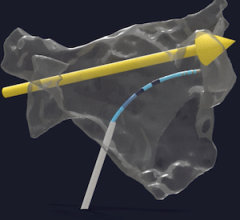
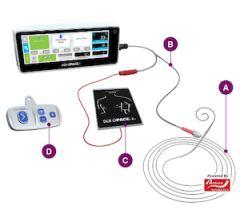
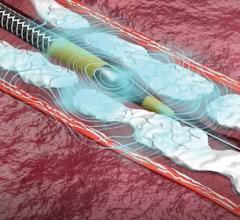
Thunderbolt recently received U.S FDA clearance and CE Mark. It introduces modulated aspiration to Penumbra's neuro thrombectomy portfolio, offering advanced CAVT technology designed to detect, fatigue, and completely ingest clot at the site of the occlusion.
References
- Tsao CW, Aday AW, Almarzooq ZI, et al. Heart Disease and Stroke Statistics-2023 Update: A Report From the American Heart Association. Circulation. Feb 21 2023;147(8):e93-e621. doi:10.1161/cir.0000000000001123
- Rennert RC, Wali AR, Steinberg JA, et al. Epidemiology, Natural History, and Clinical Presentation of Large Vessel Ischemic Stroke. Neurosurgery. Jul 1 2019;85(suppl_1):S4-s8. doi:10.1093/neuros/nyz042


 August 28, 2026