Image: Ventripoint
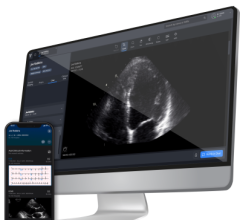
Aug. 12, 2026 — Ventripoint Diagnostics is expanding subscription-based access to its VMS+ 4.0, its FDA-cleared platform that turns standard heart-ultrasound images into three-dimensional cardiac measurements.
The company is expanding subscription-based access, hospital demonstrations, and customer-engagement programs to help more hospitals evaluate and adopt VMS+. The objective is to expand access to advanced heart imaging using ultrasound systems hospitals already have.
Hospitals, cardiac programs, distributors and strategic partners interested in evaluating VMS+, requesting a demonstration, or learning more about subscription access are invited to visit www.ventripoint.com or contact the Company directly.
VMS+ uses artificial intelligence and Ventripoint’s proprietary Knowledge Based Reconstruction technology to create 3D models and quantitative measurements of all four chambers of the heart. The system is designed to provide MRI-comparable volumetric cardiac measurements while fitting into the more widely available heart-ultrasound workflow.
A Common Hospital Barrier
One of the primary barriers to adoption of new medical technology is often not clinical interest, but the capital-budget and procurement process.
To help address that, Ventripoint is expanding its Device-as-a-Service (DaaS) model. This gives qualified hospitals and cardiac programs the option to access VMS+ through an annual subscription instead of relying solely on a traditional upfront capital purchase.
The company is targeting an approximately 80/20 weighting toward subscription-based access, while continuing to support capital-purchase options for institutions that prefer them.
Subscription arrangements are designed to include:
-
installation
-
onboarding
-
clinical training
-
software updates
-
technical support
“Hospitals can recognize the value of a technology long before it fits neatly into a capital budget,” said Hugh MacNaught, President and Chief Executive Officer of Ventripoint Diagnostics. “Our subscription model is designed to reduce that friction. It gives qualified hospitals another path to evaluate and implement VMS+ without relying solely on a large upfront equipment purchase.”
What VMS+ Does
Heart ultrasound is among the most widely used tools in cardiac care. But measuring complex heart anatomy — especially the right ventricle —can still be difficult using conventional two-dimensional imaging alone.
VMS+ is designed to enhance that process by adding AI-assisted, three-dimensional analysis to standard heart-ultrasound exams and:
-
creates 3D models and measurements of all four heart chambers
-
provides ventricular volumes and ejection-fraction measurements
-
works alongside supported ultrasound systems already used in hospitals
-
is designed to provide MRI-comparable volumetric measurements
-
includes AI-assisted point placement
-
does not require hospitals to replace their existing ultrasound systems
VMS+ 4.0 received U.S. FDA 510(k) clearance in 2025. The platform also holds regulatory approvals in Canada, the European Union and the United Kingdom and received a 2026 Gold Edison Award in Precision Health Technologies.
Expanding Subscription Access
Ventripoint’s commercial expansion comes as VMS+ continues gaining traction across a range of healthcare settings.
In July, VMS+ was selected for the AIRES – Artificial Intelligence Reconstruction of Echocardiography Study, led by The Royal Wolverhampton NHS Trust in the United Kingdom. The NHS describes AIRES as the world’s first study evaluating AI-enabled heart ultrasound specifically in oncology patients.
The study focuses on patients receiving chemotherapy for breast cancer and is expected to involve more than 500 echocardiography scans. Researchers will study whether AI can improve the accuracy, speed and efficiency of cardiac monitoring. AIRES is ongoing, and no clinical outcome should be inferred at this stage.
Separately, Ventripoint recently signed an MOU with UniDoc Health Corp. to evaluate the potential integration of VMS+ into connected-care infrastructure for remote cardiac assessment and cardiovascular screening. The proposed model could support imaging access in remote, rural, Indigenous and other underserved communities, subject to further agreements.
Designed for Workflow and Adoption
In a formal human-factors and usability study of VMS+ 3.0 involving 13 cardiac sonographers and healthcare professionals, Ventripoint reported:
-
98% task completion
-
no critical errors
-
an average workflow completed within 15 minutes
Participants completed acquisition, analysis, 3D visualization and reporting tasks in a simulated hospital environment. VMS+ 4.0 later added AI-assisted point placement intended to further support workflow efficiency.
“Clinicians need tools that are practical, not just powerful,” said MacNaught. “The usability data showed that trained professionals were able to complete the workflow quickly and successfully. That matters because adoption depends on how a technology fits into real clinical practice.”
Current and previous generations of Ventripoint technology are used by hospitals in North America and Europe. The company also has submitted VMS+ 4.0 for regulatory approval in China through strategic partner Lishman Global.


 September 09, 2026