
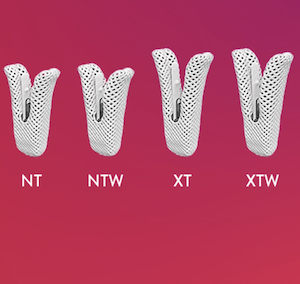
MitraClip (Photo: Abbott)
Oct. 29, 2026 — Abbott has initiated the CROWN-MV pivotal trial evaluating the safety and effectiveness of its investigational Cephea Mitral Valve System in treating people with symptomatic mitral valve disease who are not candidates for surgery and transcatheter repair. The first enrollment in the CROWN-MV study occurred at Ascension Via Christi Hospital in Wichita, Kan., led by Bassem Chehab, M.D.
The prospective study will enroll up to 585 people in the U.S., Canada and Europe diagnosed with either moderate-to-severe or severe mitral regurgitation (MR, or a leaky mitral valve) or mitral valves that are not functioning properly due to a buildup of calcium in the base of the valves (known as mitral annular calcification, or MAC).
“Patients with severe symptomatic mitral valve disease often cannot undergo conventional surgery or transcatheter mitral valve repair, and therapeutic options for these patients have been extremely limited,” said Juan F. Granada, M.D., president and chief executive officer of the Cardiovascular Research Foundation (CRF) and CROWN-MV trial chair. “The initiation of the CROWN-MV trial represents an important step forward in bringing a dedicated single-step catheter-based replacement option to clinical practice for these high-risk patients. Designed to treat complex mitral anatomies, Cephea has the potential to address a significant unmet patient need.”
Mitral Valve Disease Treatment Options
Mitral valve disease occurs when the heart’s mitral valve does not function properly. It comes in two forms: regurgitation, a condition where blood leaks backward through the heart, or stenosis, a narrowing of the valve which restricts blood flow through the heart.
For patients who are not candidates for mitral valve repair or open-heart surgery, the Cephea system offers an alternative minimally invasive way to replace the valve. The Cephea device is delivered by catheter through a vein in the leg, where it is guided across the wall between the chambers of the heart. The bioprosthetic (tissue) valve is implanted and expanded inside the diseased mitral valve to restore normal blood flow. The investigational Cephea system is designed to complement Abbott’s mitral valve portfolio that includes MitraClip, a minimally invasive transcatheter edge-to-edge repair (TEER) therapy (which clips the leaflets of the mitral valve together), and the first-of-its-kind Tendyne transcatheter mitral valve replacement (TMVR) system (which delivers a self-expanding valve through a small incision in the chest).
Third-Generation Delivery Technology
During an Innovation Session at TCT 2026, researchers presented the first 30-day early feasibility study outcomes for patients treated with the third-generation Cephea delivery system. The data presented further demonstrated the device’s performance in reducing MR and improving quality of life.
“With Abbott’s first-of-its-kind MitraClip, we were pioneers in offering a minimally invasive therapy to treat mitral regurgitation. Building on more than two decades of mitral valve leadership, Cephea is one example of how Abbott continues to innovate to address the diverse needs of patients with mitral valve disease,” said Sandra Lesenfants, senior vice president of Abbott’s structural heart business. “Early clinical experience with Cephea and the launch of the CROWN-MV pivotal trial underscore the potential of this technology and move us closer to understanding how it may benefit patients with mitral valve disease.”


 November 03, 2026