
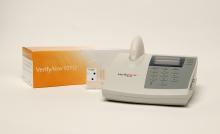
Accumetrics Inc. announced the presentation of a series of important data that solidifies the clinical utility of platelet reactivity testing. Real world outcomes data in high-risk patients receiving stents, a cost effectiveness analysis, and validation of a therapeutic window continue to demonstrate platelet reactivity as a critical element for improving the quality of care for the millions of patients on antiplatelet therapies worldwide.


AliveCor announced that its mobile Heart Monitor for iPhone is now available by prescription to enable patients to record their heart rhythm anytime, anywhere. The Heart Monitor, which makes home cardiac assessment quick and easy, is the first U.S. Food and Drug Administration (FDA)-cleared mobile device–based ECG monitor that is compatible with iPhone4 and 4S. The device was demonstrated at the ACC.13 annual meeting of the American College of Cardiology March 9 through March 11 in San Francisco.

Agfa HealthCare demonstrated its Impax CV Web+ solution at the American College of Cardiology's (ACC) 62nd Annual Scientific Session and Expo held in San Francisco from March 9-11. The technology transforms cardiovascular care delivery by providing physician access to cardiovascular images and reports regardless of location.


For better treatment planning during cardiac resynchronization therapy (CRT), Toshiba America Medical System Inc.’s Activation Imaging is the company’s latest addition to its 3-D Wall Motion Tracking software. Activation Imaging is an U.S. Food and Drug Administration (FDA)-cleared, proprietary technology available on the Aplio Artida cardiovascular ultrasound system.


Abbott announced positive long-term results for the company's innovative Absorb Bioresorbable Vascular Scaffold (BVS). Three-year results from 101 patients in the second stage of the ABSORB trial were presented at the 62nd Annual Scientific Session of the American College of Cardiology (ACC) in San Francisco. Absorb is commercially available in Europe as well as other international markets and is an investigational device in the United States.

March 14, 2013 — Researchers from Perelman School of Medicine at the University of Pennsylvania are showing in a small study that while niacin increased measured levels of HDL-C, it did not improve the functionality of HDL. This may provide an explanation for the failure of niacin to further reduce cardiovascular risk. These study results were reported at the 62nd annual scientific session of the American College of Cardiology in San Francisco.


Subscribe Now