Ischemic heart disease affects nearly 10 million Americans, and remains the leading cause of death among U.S. adults. This condition is most often due to a build-up of fat or plaque in the heart’s arteries that can reduce critical blood flow to the heart and often other parts of the body as well. With appropriate medical care, this condition remains stable in the vast majority of patients with few or no symptoms and the ability to pursue normal activities without limitations. Still, ongoing medical therapy and careful monitoring are essential to prevent heart attack and untimely death and should be based on strong scientific evidence and individual patient preferences.


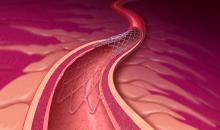
Cordis Corp. announced that the U.S. Food and Drug Administration (FDA) has approved the S.M.A.R.T. Control Vascular Stent Systems for use in the superficial femoral artery (SFA) and/or the proximal popliteal artery (PPA). The S.M.A.R.T. Stent, which has been approved for peripheral indication in international markets since 1999, is now the first stent in the United States with both Iliac and SFA indications.

CardioNet Inc. announced the launch of its new wireless event monitor, wEvent.


The introduction of hybrid technology — positron emission tomography/computed tomography (PET/CT) and single-photon emission computed tomography (SPECT)/CT -— has revolutionized the imaging world. This technology allows the combination of the exquisite anatomic details provided, for example, by CT, with the important and much needed functional, physiologic or metabolic information provided by molecular imaging. 


New endovascular grafting techniques to repair tissue following abdominal aortic aneurysm rupture are generating growing enthusiasm among vascular surgeons, and a number of those new treatment options were presented at the 39th VEITHsymposium held in New York City Nov. 14 to 18.

Stryker announced the global commercial launch of the new Trevo ProVue Retriever. The Trevo ProVue Retriever is the first clot removal device fully visible during the procedure for precise positioning within the clot and optimized clot retrieval in patients experiencing acute ischemic stroke. Previous technology only provided visibility to the edges of the device.

Subscribe Now