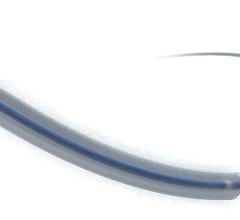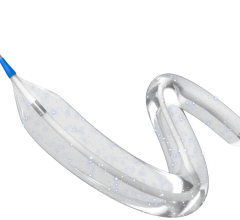
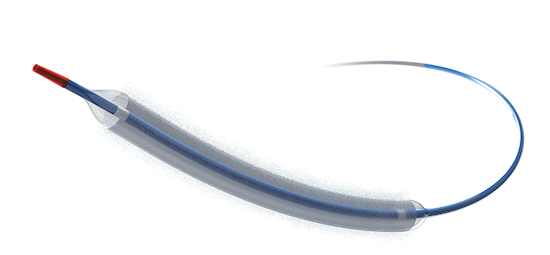
AGENT™ Drug-Coated Balloon. Photo: Boston Scientific
With a sirolimus-based drug-coated balloon (DCBs) entering the U.S. market, interventional cardiologists treating in-stent restenosis (ISR) have new options alongside established paclitaxel-based technologies.1 This raises important questions about the pros and cons of each technology, how they each fit into current treatment guidelines, and which patients may benefit most from the different options.
Boston Scientific’s AGENT™ Drug-Coated Baloon, the first coronary DCB approved in the United States, delivers paclitaxel to the vessel wall without adding another metal stent. This is particularly valuable in complex ISR, where multiple stent layers can complicate subsequent interventions.2
“What we’re trying to do with the balloon is get the drug to the tissue, have it absorbed, and prevent the restenosis that causes stents to fail,” Janar Sathananthan, MD, president of interventional cardiology at Boston Scientific explains, adding that paclitaxel is very lipophilic, meaning it is readily absorbed into fatty tissue, a property that helps the drug transfer into and remain within the vessel wall. Based on the body of clinical evidence generated to date, he says, that is one reason paclitaxel still has demonstrated advantages over sirolimus in achieving that goal.
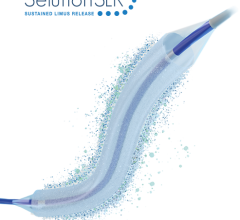
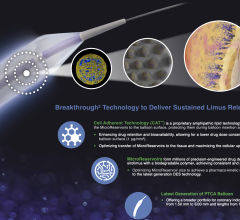
Sirolimus, on the other hand, inhibits cell proliferation through the mTOR pathway, potentially allowing for more favorable vascular healing. Because sirolimus is less lipophilic, newer DCBs such as SELUTION SLR use specialized drug-delivery technology to enhance tissue uptake and sustain drug release.3
Clinical Evidence and Experience
AGENT’s clinical foundation includes the randomized AGENT IDE trial, which enrolled 600 patients with coronary ISR. At one year, target lesion failure occurred in 17.9% of patients treated with AGENT compared with 28.6% receiving uncoated balloon angioplasty. The composite endpoint included ischemia-driven target lesion revascularization, target vessel-related myocardial infarction and cardiac death.4
Longer-term follow-up has reinforced the initial findings: At three years, AGENT was associated with a 28% relative reduction in target lesion failure compared with uncoated balloon angioplasty, along with reductions in repeat revascularization and target vessel-related myocardial infarction.5 “So we saw a sustained benefit at two years, and at three years, we continued to see a benefit,” Dr. Sathananthan adds. “That’s really encouraging in terms of the long-term durability of this therapy.”
These results support AGENT’s effectiveness for coronary ISR, although it’s important to note that the trial compared AGENT with uncoated balloon angioplasty rather than directly with sirolimus-based DCBs.
Choosing the Best Option
How physicians decide which ISR treatment will work for them requires evaluating more than the drug coating. The number of existing stent layers, vessel diameter, lesion characteristics and mechanism of restenosis can all come into play, according to a 2023 SCAI expert consensus statement.6
The newer sirolimus-based SELUTION SLR may offer an alternative for patients with paclitaxel hypersensitivity or ISR in vessels larger than 4.0 mm and up to 4.5 mm, a diameter range outside AGENT’s FDA-approved indication.7
For patients with more complex ISR, AGENT has demonstrated benefits. The AGENT IDE trial enrolled patients with complex disease, including those with diabetes and multiple stent layers. A subgroup analysis found that patients with multilayer ISR experienced higher overall rates of target lesion failure, while treatment with AGENT reduced that risk compared with uncoated balloon angioplasty.4
For healthcare professionals, the goal is to choose an option that manages the underlying cause of restenosis while limiting the number of additional procedures the patient may need in the future.
Drug Coated Balloon
AGENT also received FDA Breakthrough Device designation for de novo small vessel coronary artery disease in 2026, reflecting its potential to offer another treatment option for patients with coronary disease in lieu of implanting an initial stent.8 In line with that, the ongoing STANCE trial is evaluating AGENT against standard percutaneous coronary intervention using drug-eluting stents and/or balloon angioplasty in patients with de novo coronary disease. The study is hoping to determine if a DCB-based strategy has a broader role in coronary intervention, including small-vessel disease.9
Boston Scientific is also pursuing potential expansions of AGENT’s indications and available sizes. These proposed uses and configurations should be distinguished from the device’s currently approved applications; additional clinical evidence and regulatory review are necessary before broader use can be established.
“We need data to support those uses, and that’s what I think the field is generating,” Dr. Sathananthan says. “I also think there will be further changes through improvements to the devices. We’re hoping to do the same with AGENT, where we can further improve the results with the therapy we have now.”
References
-
U.S. Food and Drug Administration. Premarket approval (PMA): SELUTION SLR 014 PTCA drug-eluting balloon (P250041). Approved Sept. 18. www.accessdata.fda.gov/scripts/cdrh/cfdocs/cfpma/pma.cfm
-
U.S. Food and Drug Administration. AGENT paclitaxel-coated balloon catheter – P230035. Feb. 29, 2024. www.fda.gov/medical-devices/recently-approved-devices/agent-paclitaxel-coated-balloon-catheter-p230035
-
Gherasie F-A, Ali AH, Corzanu AM, Costescu EC, Cornea S-G. Paclitaxel- and sirolimus-coated balloons versus drug-eluting stents in coronary artery disease: A comprehensive narrative review. Life. 2026;16(1):63. https://doi.org/10.3390/life16010063
-
Yeh RW, Shlofmitz R, Moses J, et al. Paclitaxel-coated balloon vs. uncoated balloon for coronary in-stent restenosis: The AGENT IDE randomized clinical trial. JAMA. 2024;331(12):1015–1024. https://doi.org/10.1001/jama.2024.1361
-
Society for Cardiovascular Angiography & Interventions. Three-year outcomes of the AGENT IDE trial: Coverage from CRT 2026. 2026. www.scai.org/three-year-outcomes-agent-ide-trial-coverage-crt-2026
-
Klein LW, Nathan S, Maehara A, et al. SCAI expert consensus statement on management of in-stent restenosis and stent thrombosis. Journal of the Society for Cardiovascular Angiography & Interventions. 2023;2(4):100971. https://doi.org/10.1016/j.jscai.2023.100971
-
U.S. Food and Drug Administration. SELUTION SLR 014 PTCA Drug-Eluting Balloon: Summary of Safety and Effectiveness Data (SSED). PMA P250041. Sept. 18. www.accessdata.fda.gov/cdrh_docs/pdf25/P250041B.pdf
-
Boston Scientific. AGENT drug-coated balloon (DCB). www.bostonscientific.com/en-US/products/drug-coated-balloon--coronary/agent-drug-coated-balloon/.html
-
ClinicalTrials.gov. AGENT DCB STANCE: AGENT drug-coated balloon for stent avoidance in PCI for de novo coronary artery disease. NCT06959524. https://clinicaltrials.gov/study/NCT06959524

 August 22, 2025