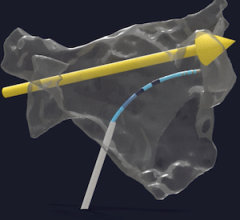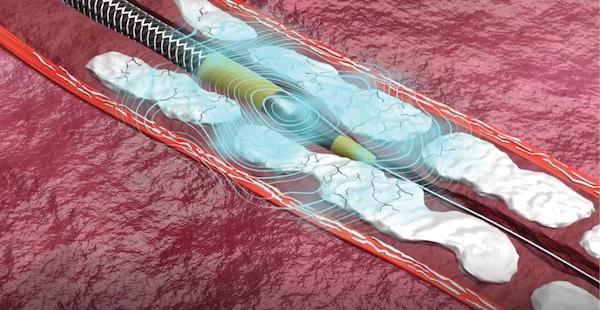
The Shockwave Javelin Coronary IVL Catheter uses sonic pressure waves to crack calcium. (Photo: Johnson & Johnson MedTech)
Since receiving FDA approval in 2016, intravascular lithotripsy (IVL) systems have grown in popularity among interventionalists for treating calcified plaque inside coronary and peripheral arteries. Now, IVL has reached a major milestone, treating 1 million patients worldwide, according to data released at the Transcatheter Cardiovascular Therapeutics (TCT) 2025 meeting in San Francisco in October.
“The beauty of IVL is it’s really democratized intervention on these complex lesions,” says Nick West, MD, Chief Medical Officer at Shockwave Medical, part of Johnson & Johnson MedTech. “Patients no longer need to go to specialist centers with lots of experience and these highly complex devices to get these interventions. In fact, IVL is the only device endorsed by SCAI [the Society for Cardiovascular Angiography & Interventions] across all U.S. hospital settings because of its safety profile.”
Behind the Data
Eight presentations involving Shockwave Medical’s IVL systems and the coronary sinus Reducer device were presented at TCT 2025, including company-run studies and investigator-led trials sponsored by Shockwave.
Among the most anticipated data sets was the Javelin CAD Early Feasibility Study, conducted in the United Kingdom. The Javelin Coronary IVL Catheter replaces the traditional balloon with a single distal emitter designed to treat difficult-to-cross lesions. “The first 20 cases were presented, showing that the device is really efficacious in modifying and crossing very complex lesions,” Dr. West says. Enrollment in a similar U.S. IDE trial, FORWARD CAD, is expected to conclude later this year.
Another key analysis came from the EMPOWER CAD OCT subanalysis, which evaluated IVL in nearly 400 women with complex coronary disease. Results showed a 95% procedural success rate.1
A third presentation highlighted a gender-based analysis from the REDUCER-I registry, a multicenter, nonrandomized study conducted at 25 centers in Europe. The 12-month analysis showed significant improvements in angina symptoms and low rates of major adverse cardiac events after treatment with the Shockwave Reducer device. 2
Clinician Feedback Spurs Innovation
Key to the evolution of IVL, Dr. West says, is listening to feedback from interventionists. This iterative approach led to the launch of the Shockwave C2 Aero, which debuted at TCT 2025. The device features a redesigned shaft, a tapered tip, a hydrophilic coating, and a more flexible balloon.
“We heard from coronary interventionists that they love the device when they can get to the lesion,” Dr. West says. “So, we responded to that with this new, far more deliverable device.” A full market release for Shockwave C2 Aero is planned for early 2026.
New Tools in the IVL Toolbox
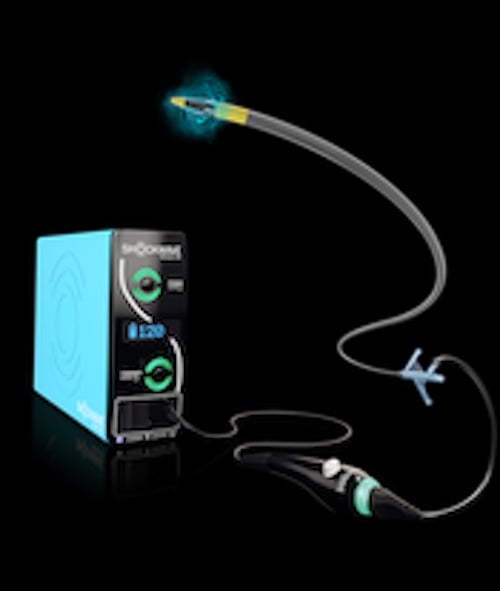
As new players enter the market, interventionists will benefit from a choice of IVL tools, Dr. West says.
“There’s no one tool that is best for everything, and calcified complex coronary disease is no exception to that,” he says. “Our clinicians have a range of tools at their disposal. They should choose what they think is the most appropriate, what they have experience in, and what’s available at their center, because not every center has every tool.”
What’s Ahead
Keeping pace with the growing IVL market will require device manufacturers to invest heavily in product development. Dr. West estimates that Shockwave has quadrupled its research and development budget over the past four years, expanding from seven innovation programs to nearly 40 today.
Innovations on the horizon from Shockwave include a dedicated carotid IVL platform expected to enter U.S. clinical trials early next year. The device aims to address an unmet need for patients with calcified carotid stenosis, potentially reducing the risk of cerebral ischemia, transient ischemic attacks, and strokes, Dr. West says. Shockwave is also exploring IVL-based approaches for aortic and mitral valve stenosis.
“What I would like to see in the next five years is not only those two products going through the clinical trial cycle, but also I’d like to think that maybe we’ll reach another 1 million patients,” Dr. West says.
References
1. Gonzalo N, McEntegart M, Shlofmitz R, et al. TCT-157 The EMPOWER CAD study of women with calcified coronary arteries: insights into the use of optical coherence tomography with intravascular lithotripsy. J Am Coll Cardiol. 2025;86(17_Suppl):S871. doi:10.1016/j.jacc.2025.09.231
2. Buschmann E, Van de Hoef T, De Silva R, et al. TCT-793 Sex-specific outcomes of treating patients with refractory angina with the coronary sinus Reducer: one-year outcomes from the REDUCER-I registry. J Am Coll Cardiol. 2025;86(17_Suppl):S8345. doi:10.1016/j.jacc.2025.09.867

 August 28, 2026