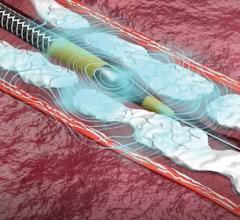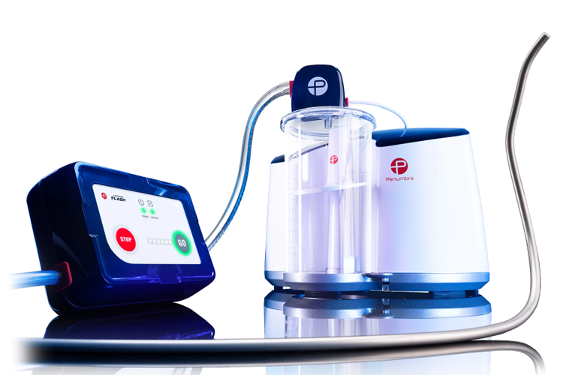
Lightning Flash 3.0 (Photos: Penumbra)
Venous thromboembolism (VTE), and pulmonary embolism (PE) in particular, are among the most complex and dangerous acute cardiovascular conditions. VTE is the number one cause of preventable death among hospital patients, affecting up to 900,000 Americans each year and taking up to 100,000 lives.1,2 PE represents the third leading cause of cardiovascular death and accounts for the majority of deaths from VTE.3
The nonspecific presentation of PE, along with its wide spectrum of severity and potential for rapid deterioration demand a care model that emphasizes early diagnosis, precise risk stratification and timely intervention. As PE management evolves, advances in endovascular therapy — supported by high quality evidence and increasingly sophisticated technology — are redefining what optimal care looks like.
Modern Diagnosis Sets the Stage for Intervention
Improved imaging and physiologic assessment are central to today’s PE workflows. Rather than relying on symptoms alone, clinicians now integrate CT pulmonary imaging with biomarkers and measures of right ventricular (RV) function to understand both immediate severity and downstream risk. These techniques allow clinicians to identify patients with an elevated risk of decompensation and offer advanced therapies to reduce that risk.
“In 2026, we’re diagnosing PE faster and with greater precision. A modern workup pairs high‑quality CT pulmonary angiography with a deliberate look at right ventricular (RV) function, most notably the right ventricular/left ventricular (RV/LV) ratio, plus pragmatic biomarkers and clinical scores,” said Dr. Robert Lookstein, MD, MSc; co-global principal investigator of the STORM-PE RCT and professor of radiology and surgery at Icahn School of Medicine at Mount Sinai.
This shift has clinical consequences. RV/LV ratio is not just a diagnostic datapoint — it is a meaningful indicator of recovery. “Small improvements in RV strain translate into meaningful prognostic shifts, making it a critical data point for patient care and clinical trials alike,” said Dr. Lookstein.
Together, these insights underline why advanced therapy is increasingly considered as an early intervention for certain patients at intermediate risk.
STORM‑PE and the Shift Toward Frontline Thrombectomy
The STORM‑PE randomized controlled trial marks a turning point by providing Level 1 evidence that CAVT™ plus anticoagulation (AC) reduces right heart strain compared with anticoagulation alone in patients with acute intermediate‑high risk PE.4
“These findings mark a pivotal step in advancing care for PE, providing the strongest evidence to date that advanced therapy with CAVT can rapidly and safely improve recovery of the right heart compared to conventional anticoagulation therapy,” said Dr. Lookstein.
PE patients randomized to Penumbra’s computer assisted vacuum thrombectomy (CAVT) plus AC achieved a significantly greater reduction in RV/LV ratio than those on AC alone, with significantly more achieving a >0.2 reduction and normalization to ≤1.0 at 48 hours with a comparable safety profile.i,4
STORM-PE also demonstrated improved clinical measures: lower heart rate, reduced oxygen requirement, and significantly greater 90-day functional capacity, as measured by 6-minute walk distance.5
“What distinguishes STORM‑PE from prior studies is its deliberate focus on recovery beyond early physiologic improvement,” Dr. Rachel Rosovsky, MD, MPH, co-global principal investigator of STORM-PE RCT, hematologist at the Massachusetts General Hospital and Associate Professor of Medicine at Harvard Medical School. “Functional endpoints are critical because they capture outcomes that are most meaningful to patients.” These findings underscore the advantages of CAVT therapy for these patients.
Lightning Flash® 3.0: Technology Designed for Today’s PE Patient
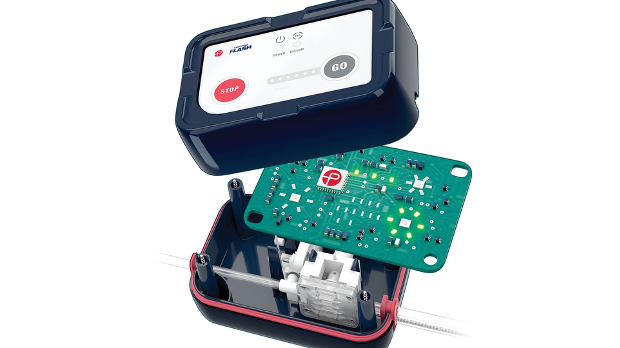
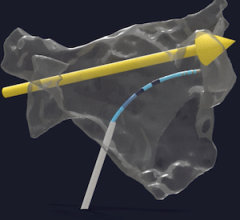
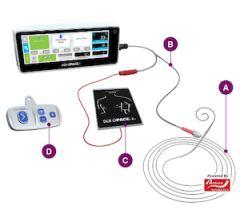
Against this backdrop, Penumbra’s latest Lightning Flash 3.0 system represents the most advanced evolution in CAVT technology to date. Its refined algorithms are designed to detect the difference between thrombus and patent flow and provide real-time audio-visual cues alerting the operator when the clot is engaged for a more intuitive experience.
Designed for rapid removal of pulmonary and venous thrombus, Flash 3.0 builds on established CAVT principles and is engineered to reduce systemic friction encountered in real‑world PE care. Enhanced clot‑sensing algorithms, enlarged aspiration tubing, and automated decompression are engineered to maintain consistent aspiration performance even in the setting of large thrombus burden. These features represent a clear step forward demonstrating 1.3 times faster clot removal and 60% fluid savings.ii
A Broader Vision for PE and VTE Recovery
The latest advances in VTE management increasingly rely on multidisciplinary response teams, where rapid consensus and execution are essential in providing patients with tailored care pathways. The emergence of Level 1 evidence will continue to open the door to advanced therapy for appropriately selected patients.
As the evidence builds, future considerations should include not only questions of survival but also questions of function. Progress should not just be measured in clinical endpoints, but also in restored function and improved quality of life.
While PE has been at the center of recent trials, the implications of next‑generation CAVT extend across the VTE continuum, including lower extremity venous thrombus.
With STORM-PE establishing the evidence base, PE care is shifting toward a new expectation: that rapid, safe, and durable recovery is the standard — not the exception.
References
-
Al-Hameed FM. Venous thromboembolism prophylaxis: Solutions are in our hands. Ann Thorac Med. 2011 Jul;6(3):105-6. doi: 10.4103/1817-1737.82434. PMID: 21760838; PMCID: PMC3131749.
-
Centers for Disease Control and Prevention. (2023, June). Impact of Blood Clots on the United States Infographic. National Center on Birth Defects and Developmental Disabilities (NCBDDD). Accessed March 11, 2026.
-
Goldhaber SZ, Bounameaux H. Pulmonary embolism and deep vein thrombosis. Lancet. 2012 May 12;379(9828):1835-46. doi: 10.1016/S0140-6736(11)61904-1. Epub 2012 Apr 10. PMID: 22494827.
-
Lookstein RA, Konstantinides SV, Weinberg I, et al. Randomized controlled trial of mechanical thrombectomy with anticoagulation versus anticoagulation alone for acute intermediate-high risk pulmonary embolism: primary outcomes from the STORM-PE trial. Circulation. 2026;153:21-34. doi: 10.1161/CIRCULATIONAHA.125.077232
-
Presented by Rosovsky, R. Randomized controlled trial of mechanical thrombectomy with anticoagulation versus anticoagulation alone for acute intermediate-high risk PE: primary outcome, functional endpoints, and core lab findings from STORM-PE. Presented at: VIVA (Vascular InterVentional Advances) 2025; November 3, 2025; Las Vegas, NV, USA.
[i] STORM-PE was not powered to detect differences in safety.
[ii] Compared to Lightning Flash 2.0. Tests performed and data on file at Penumbra, Inc. Test performed using bovine blood and water. Bovine blood took 1.3x more time to be fully ingested in bench top testing of Lightning Flash 2.0 when compared to Lightning Flash 3.0, while 60% less water was removed with Lightning Flash 3.0 when compared to Lightning Flash 2.0. Bench test results may not be indicative of clinical performance.
Interview sponsored by Penumbra, Inc. Dr. Lookstein and Dr. Rosovsky are consultants for Penumbra, Inc. Procedural and operative techniques and considerations are illustrative examples from physician experience. Physicians’ treatment and technique decisions will vary based on their medical judgment. The clinical results presented herein are for informational purposes only and may not be predictive for all patients. Individual results may vary depending on patient-specific attributes and other factors.
Caution: Federal (USA) law restrictions these devices to sale by or on the order of a physician. Prior to use, please refer to the Instructions for Use for complete product indications, contraindications, warnings, precautions, potential adverse events, and detailed instructions for use. Please visit https://www.penumbrainc.com/pdf/brief-summaries-risk-statement/ for the complete IFU Summary Statements. Please contact your local Penumbra representative for more information.

 August 28, 2026