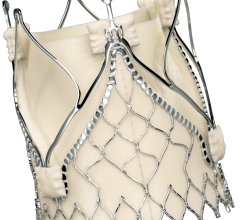
September 29, 2020 — Boston Scientific launched the Acurate neo2 transcatheter aortic valve replacement (TAVR) system in Europe. This next-generation transcatheter aortic valve implantation (TAVI) technology is a new platform designed with a number of features to improve upon the clinical performance of the original Acurate neo platform. Compared to the previous generation device, the Acurate neo2 valve system also has an expanded indication for patients with aortic stenosis – with no specified age or risk level – who are considered appropriate candidates for the therapy by their heart team, including a cardiac surgeon.
Indicated to restore function and normal blood flow through a severely narrowed aortic valve, the Acurate neo2 Valve System features a new annular sealing technology designed to conform to irregular, calcified anatomies and further minimize paravalvular regurgitation or leaking (PVL). In addition, the delivery system simplifies access to smaller and complex vessels at the entry site and allows for highly accurate valve positioning while the top-down deployment mechanism further supports stable placement and release to ensure the best patient outcomes.
"We believe having this differentiated valve with the enhanced sealing technology will further drive favorable market experience and growth," said Joe Fitzgerald, president, interventional cardiology, Boston Scientific. "Combined with the Lotus Edge Aortic Valve System and Sentinel Cerebral Protection System to protect the brain against the risk of TAVI-related stroke, the Acurate neo2 valve represents the natural evolution of our complementary dual-valve TAVI toolkit that covers the needs of a wide range of patient cases."
Data from the Acurate neo2 CE mark study demonstrated PVL rates for the Acurate neo2 Valve System to be lower than previously reported with the current generation Acurate neo valve. At 30 days and one year after implantation, respectively, 97% and 97.5% of patients experienced ≤ no/trace or mild PVL, 3% and 2.5% of patients experienced moderate PVL and 0% of patients experienced severe PVL.[1,2]
"We are pleased to bring the latest iteration of Acurate technology to market, offering design improvements that further support procedural performance and optimal outcomes for patients with severe symptomatic aortic stenosis, from those with simple to the most challenging anatomies," said Dr. Ian Meredith, AM, executive vice president and global chief medical officer, Boston Scientific. "The straightforward implant procedure also enables physicians to reduce the length of time patients need to stay in the hospital, without compromising on safety and clinical results."
The Acurate neo2 Aortic Valve System received CE mark in April 2020. In the U.S., the Acurate neo2 Valve System is an investigational device being assessed in the Acurate IDE clinical trial and is not available for sale.
For more information: www.bostonscientific.eu/acurateneo2
About Aortic Valve Disease
Aortic valve disease results in dysfunction of the aortic valve, one of the four valves that control the flow of blood in and out of the heart. Aortic valve stenosis is the process of thickening and stiffening in the valve, which can result in an abnormal narrowing of the aortic valve opening and reduction in blood flow. Aortic stenosis is the most common valvular heart disease in the world, affecting approximately 7 percent of the population over age 65.3 From the onset of severe aortic stenosis symptoms, the average survival rate is 50 percent at two years and 20 percent at five years without aortic valve replacement.[4,5]
Find more news on transcatheter valves
References:
1. Transcatheter aortic valve implantation for severe aortic valve stenosis with the Acurate neo2 valve system:30-day safety and performance outcomes. Presented by H. Möllmann at PCR London Valves 2018.
2. Transcatheter aortic valve replacement with the Acurate neo2 valve system:1-year clinical and hemodynamic outcomes. Presented by H. Möllmann at TVT 2019.
4. Ramaraj R and V.L. Sorrell. "Degenerative Aortic Stenosis." BMJ. 2008; 336(7643):550-555.

 August 10, 2026