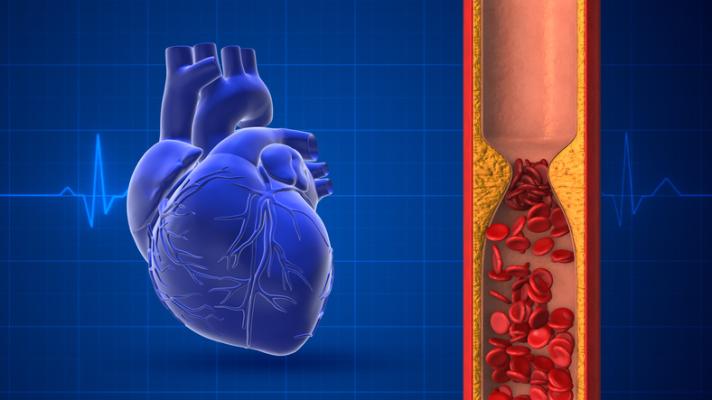
Elixir Medical has announced the company’s novel bioadaptive implant, DynamX Sirolimus-Eluting Coronary Bioadaptor System, has been granted Breakthrough Device Designation by the U.S. Food and Drug Administration (FDA). The designation recognizes the novelty of the technology and the potential to provide a more effective treatment option for patients with coronary artery disease. Image courtesy: Getty Images
June 18, 2024 — Elixir Medical has announced the company’s novel bioadaptive implant, DynamX Sirolimus-Eluting Coronary Bioadaptor System, has been granted Breakthrough Device Designation by the U.S. Food and Drug Administration (FDA). The breakthrough designation, according to the Milpitas, CA-based technology company, is for an indication to improve coronary luminal diameter, restore hemodynamic modulation, and reduce plaque progression in patients with symptomatic ischemic heart disease due to discrete de novo native coronary artery lesions.
The DynamX bioadaptor has a novel design and mechanism of action designed to return the diseased vessel to a more normal condition, through three distinct phases. After implantation, the locked phase establishes the maximum flow lumen and restores blood flow to treat symptoms of coronary artery disease (CAD). Unique to the bioadaptor, the second phase occurs after the bioadaptor is encapsulated with tissue and the absorbable polymer coating is resorbed. This enables the bioadaptor helical strands to unlock and separate, releasing and allowing the vessel to grow and adapt to maintain the established blood flow lumen. The third and most unique phase provides the vessel adaptive dynamic support by the separated helical strands. This restores the vessel viability and hemodynamic modulation by returning pulsatility, compliance, adaptive blood flow volume, and plaque stabilization and regression.
FDA Breakthrough Device Designation accelerates the review process for novel technologies that may provide more effective treatment or diagnosis of life-threatening or irreversibly debilitating diseases or conditions, such as CAD, which impacts 7.8% of the U.S. population.1
To date, interventional treatment of coronary artery disease with drug-eluting stents has been able to establish flow angiographically. However, up to 20% of patients experience a repeat adverse event related to the implant within five years of treatment.2
“For many years, it was thought that caging of the vessel with stents was the main driver for annual increasing non-plateauing event rates. However, the data with the ‘leave nothing behind’ approach with bioresorbable scaffold technologies, showed non-plateauing event rates continue to occur even after resorption of the scaffold, so we needed a more innovative approach to restore vessel viability,” said Motasim Sirhan, CEO of Elixir Medical.3
“We very much appreciate FDA’s breakthrough designation recognition of the bioadaptor technology,” continued Sirhan. “We look forward to working with FDA, Centers for Medicare & Medicaid Services, and respective physician societies to bring this technology to U.S. patients as soon as possible to elevate the standard of care for cardiovascular disease treatment.”
“The Elixir team is honored to partner with the Invus Group, our financial partners. We are grateful for their unwavering commitment and support of our mission throughout the years,” continued Sirhan.
Late-breaking two-year BIOADAPTOR RCT data presented at EuroPCR 20244 demonstrated a statistically significant benefit of DynamX bioadaptor over the standard of care, Resolute Onyx Drug-Eluting Stent (DES), where in patients treated for de novo lesions (per protocol patient population analysis), there was a 65% reduction in TLF rate (1.9% versus 5.5%; p=0.046) respectively. This reduction was driven by lower adverse events across all components of the composite endpoint for DynamX. In the critical left anterior descending (LAD) artery vessels the effect was even more pronounced with a 78% reduction (1.9% vs. 8.7%; p=0.028) in the TLF rate with DynamX bioadaptor versus DES. These data follow the 12-month results showing superiority over DES in imaging endpoints including lower % diameter stenosis, late lumen loss, and the new measures of vessel pulsatility, compliance and adaptive blood flow by restoring hemodynamic modulation and vessel viability.5
The DynamX bioadaptor is the first coronary implant technology designed to restore coronary artery hemodynamic modulation as demonstrated by restored vessel pulsatility, compliance, adaptive increase in blood flow volume, and providing plaque stabilization and regression. With a unique mechanism of action (MOA), it addresses the shortcomings of drug-eluting stents and bioresorbable scaffolds demonstrated by remarkably low clinical event rates that showed a plateau between one-year and two-year clinical follow-up.
Elixir Medical Corporation, a privately held company based in Milpitas, California, develops disruptive platforms to treat coronary and peripheral artery disease that include DynamX BTK, LithiX Hertz Contact IVL and TRx site-specific antithrombotic therapy. The DynamX Coronary Bioadaptor System is CE-marked; not available for sale in the U.S.
More information: www.elixirmedical.com
References:
1 https://www.ahajournals.org/doi/10.1161/CIR.0000000000001256
2 Madhavan MV, et al. Stent Related Adverse Events greater than 1 Year After PCI. JACC 2020.
3 https://www.jacc.org/doi/10.1016/j.jacc.2023.05.003
4 Saito S, M.D. Presented at EuroPCR 2024.
5 Saito S, et al. BIOADAPTOR RCT 12-month clinical and imaging data. eClinicalMedicine Lancet 2023.

 August 10, 2026