Image: Getty Images
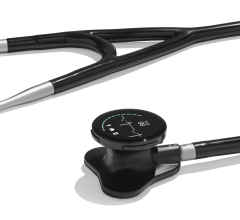
Feb. 5, 2026 — New research shows that the use of an AI-enabled digital stethoscope more than doubled the identification of moderate to severe valvular heart disease during routine clinical examinations, compared to a traditional stethoscope.
The US study, "Artificial-Intelligence-Enabled Digital Stethoscope Improves Point-of-Care Screening for Moderate to Severe Valvular Heart Disease," was recently published in the European Heart Journal - Digital Health. It shows that the AI-assisted tool could help doctors identify patients who may otherwise go undiagnosed.
A total of 357 patients with risk factors for heart disease, and aged 50 or above, were assessed using both a traditional stethoscope and an AI-enabled digital stethoscope in a single-arm, single-blinded, prospective study. Participants were recruited from three primary care settings in the same geographic area; the median age of the participants was 70 years, and 61.9% were women.
The AI-stethoscope demonstrated significantly higher sensitivity in detecting the heart sound patterns that indicate valvular heart disease with 92.3% sensitivity compared with 46.2% with the traditional stethoscope.
Valvular heart disease can affect more than one in two adults over 65 years old but often remains undiagnosed by health professionals using a traditional stethoscope in general practice. Valvular heart disease can affect heart function to reduce a person’s capacity to carry out physical activities, and is associated with arrhythmia, heart failure, increased hospitalization and can be fatal. However, symptoms may be absent, vague or non-specific, meaning many patients are unaware they have the condition until it is more advanced.
Dr. Rosalie McDonough, Senior Author, explained the importance of the finding: “Valvular heart disease is unfortunately very common among older adults, yet it often goes undetected until symptoms become advanced. This means that patients can experience complications and worsening health which could have been prevented with earlier diagnosis.”
“We have shown that an AI-enabled stethoscope is much better at spotting which patients have moderate to severe valvular disease than a traditional stethoscope in real-world clinical settings. We hope this technology will allow patients to get faster access to an echocardiogram to formally diagnose their condition and then access treatment more quickly. At a population level, this technology could reduce hospital admissions and the overall cost of healthcare.”
The AI-enabled digital stethoscope works by recording high-fidelity heart sounds and applying machine-learning algorithms trained to recognize the acoustic patterns associated with valvular heart disease. Traditional methods rely on a health professional using a conventional stethoscope, which relies on the health professional’s own hearing and experience, and may be affected by issues such as background noise or time pressures. Patients that are flagged as being at risk for valvular disease in primary care will be referred to be diagnosed by echocardiography.
“The use of artificial intelligence provides an additional analytical layer, highlighting abnormalities that may be difficult to consistently detect by ear alone. But technology is not taking over; use of this device requires doctors to use their own clinical judgment,” Dr. McDonough added.
“An additional benefit we observed during the study was that patients assessed with the AI-enabled digital stethoscope seemed more engaged during their appointment. We think this was because they could see and hear what the clinician was responding to – which may increase trust and engagement with follow-up treatment.”
The study authors noted that the AI-enabled digital stethoscope did lead to a minor reduction in specificity which could potentially increase false positives, but suggest this risk is balanced against the value of earlier detection. They also note that further research will be needed to test performance of the technology across broader clinical environments and more diverse populations.
“This research adds to a growing body of evidence that artificial intelligence can enhance traditional clinical tools in a practical and responsible way that does not replace health professionals but gives them tools to have more confidence in their assessment of patients,” Dr. McDonough concluded.

 July 02, 2026