Photo: Getty Images
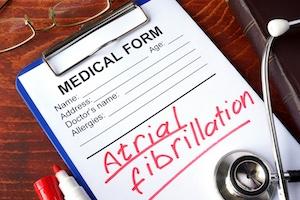
April 13, 2026 — Heart failure is common in people who have atrial fibrillation detected during screening, according to a presentation at EHRA 2026,1 the annual congress of the European Heart Rhythm Association, a branch of the European Society of Cardiology .
Atrial fibrillation (AF) affects almost 38 million people worldwide, with the prevalence predicted to double over the next 35 years.2 Stroke is a feared outcome of AF, but heart failure (HF) also occurs frequently in patients with AF and is a major cause of death.3
“HF and AF have a bidirectional relationship and accelerate each other’s progression, so it is important to identify and treat HF early in patients with AF,” explained Doctor Gina Sado from Danderyd Hospital, Stockholm, Sweden. “HF has been well studied in patients with clinically known AF, but little is known about the incidence and timing of HF in individuals whose AF has been detected during screening.”
In the Swedish STROKESTOP and STROKESTOP II studies,4,5 individuals aged 75–76 years were randomized to receive ECG-based AF screening or to serve as controls. This post-hoc analysis studied the incidence of new HF diagnosis based on a median follow-up of 6.9 years for STROKESTOP and 5.1 years for STROKESTOP II. Data on HF diagnoses and mortality were obtained from national registries. Cox regression was used to estimate the hazard ratios (HRs) for incident HF across groups.
Out of 6,824 individuals screened in STROKESTOP, new AF was detected in 252 individuals and of these, 57 were diagnosed with HF (23%) over the follow-up period.
Out of 6,601 individuals screened in STROKESTOP II, new AF was detected in 152 individuals and of these, 31 were diagnosed with HF (20%) over the follow-up period.
In STROKESTOP, screening-detected AF was associated with a threefold increased risk of HF compared with individuals without AF (adjusted HR 3.19; 95% confidence intervals [CI] 2.42 to 4.21) and with a comparable HF risk to patients with previously known AF (adjusted HR 2.86; 95% CI 2.34 to 3.50). Similar results were observed in STROKESTOP II.
Notably, HF was diagnosed early, within 6 months after AF detection in both studies and AF groups.
Summing up the results, Doctor Sado concluded: “In individuals with screening-detected AF, the risk of developing HF was threefold that of participants without AF and comparable to that of patients with clinically known AF. These findings suggest that asymptomatic AF is not a benign condition and highlight the need for early detection of both AF and HF.”
Funding
STROKESTOP was supported by Stockholm County Council, the Swedish Heart & Lung Foundation, King Gustav V and Queen Victoria's Freemasons' Foundation, the Klebergska Foundation, the Tornspiran Foundation, the Scientific Council of Halland Region, the Southern Regional Healthcare Committee, the Swedish Stroke Fund, Carl Bennet AB, CIMED, Boehringer Ingelheim, Bayer, Bristol Myers Squibb and Pfizer.
STROKESTOP II was supported by Roche Diagnostics, Carl Bennet AB, CIMED, Stockholm Region and the Swedish Heart Lung Foundation.
References:
- ‘Heart failure over time in patients with screening detected atrial fibrillation - a posthoc analysis of the STROKESTOP and STROKESTOP II studies’ presented during the Atrial fibrillation miscellaneous session on 13 April at 08:30 to 09:30 in Room Agora.
- Lane DA, Andrade JG, Arbelo E, et al. Atrial fibrillation. Lancet. 2026;407:1000−1013.
- [Deisenhofer I. Atrial fibrillation in heart failure: Prime time for ablation! Heart Rhythm O2. 2021;2(6Part B):754−761.
- Svennberg E, Friberg L, Frykman V, et al. Clinical outcomes in systematic screening for atrial fibrillation (STROKESTOP): a multicenter, parallel group, unmasked, randomized controlled trial. Lancet. 2021;398:1498−1506.
- Kemp Gudmundsdottir K, Fredriksson T, Svennberg E, et al. Stepwise mass screening for atrial fibrillation using N-terminal B-type natriuretic peptide: the STROKESTOP II study. Europace 2020;22:24–32.
 August 28, 2026