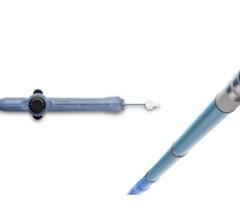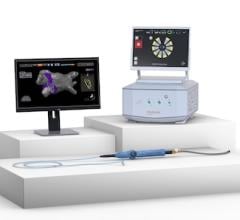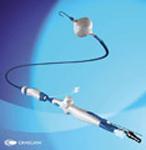
July 16, 2010 – Use of anatomically designed catheters reduces lab time by more than one-third compared to traditional point-by-point focal ablation procedures for pulmonary vein isolation (PVI), according to data from the FAST-PVI study, supported by Medtronic Inc. The data were released recently at Cardiostim 2010, the 17th World Congress in Cardiac Electrophysiology and Cardiac Techniques.
PVI is the cornerstone catheter procedure to treat paroxysmal atrial fibrillation (PAF). The anatomically shaped Arctic Front Cardiac CryoAblation Catheter and advanced radiofrequency (RF) Pulmonary Vein Ablation Catheter (PVAC) allowed physicians to more efficiently isolate the pulmonary veins than do focal RF catheters. Acute PVI success rate for the anatomical catheters was 99 percent.
The Arctic Front is approved in Europe to treat paroxysmal atrial fibrillation (AF); PVAC is approved in Europe to treat supraventricular tachycardia (SVT). Both catheters are under investigational use in the United States. Arctic Front is under U.S. Food and Drug Administration (FDA) review for paroxysmal AF and PVAC for the treatment of continuous AF.
The retrospective FAST-PVI study compared procedure time using anatomically designed catheter ablation systems with procedure times of point-by-point focal systems. Results from nine German centers and 444 procedures showed that using anatomical catheters for PVI allows for more efficient procedures, reduced cath lab occupancy time and faster physician procedure time. Of the 245 procedures using anatomical Arctic Front and PVAC catheters, overall staff time lowered by 36 percent, fluoroscopy time was reduced by 33 percent and physician procedure time was reduced by 37 percent.
The goal of catheter ablation is to isolate the pulmonary vein to stop the rapid beating of the upper heart chambers by ablating (or blocking) the conduction pathways that trigger atrial fibrillation (AF). Catheter ablation is a minimally invasive procedure that is recommended after commonly prescribed drugs have failed to achieve acceptable results in symptomatic patients. Previously, AF ablation procedures could only be performed with a time-consuming point-by-point focal ablation technique to create individual lesions to block AF conductivity. Now, anatomically shaped catheters can efficiently create lesions with fewer applications because they have been designed specifically for isolating the pulmonary vein.
 September 08, 2026